Why Do Garage Door Styles Matter When Choosing a Door?
A garage door can cover nearly a third of a home’s front elevation. Its style can change how the whole house feels. The right choice connects the door to the roofline, windows, siding, and entryway. The wrong one can feel oddly out of place. That contrast is easy to miss in a small showroom sample.
Architect Frank Lloyd Wright offered a useful design principle: “Form and function should be one, joined in a spiritual union.” His words were not about garage doors specifically, but they apply here. Garage door styles affect more than appearance. Panel shapes, window placement, materials, and finishes influence curb appeal, privacy, daylight, maintenance, and even how prominent the door looks from the street. Small details matter. A row of narrow windows, for example, may echo a home’s upper windows, while a wood-look finish can soften a broad, plain façade.
Style alone should not decide the purchase. The door also needs to suit the opening, climate, use, and budget. Insulation may matter more in an attached garage. A complex finish may need more upkeep than expected. And a popular design is not automatically right for every home. It is worth stepping back and comparing samples against the actual exterior, in daylight. Color can look different on a cloudy afternoon. That simple check can prevent an expensive mismatch.
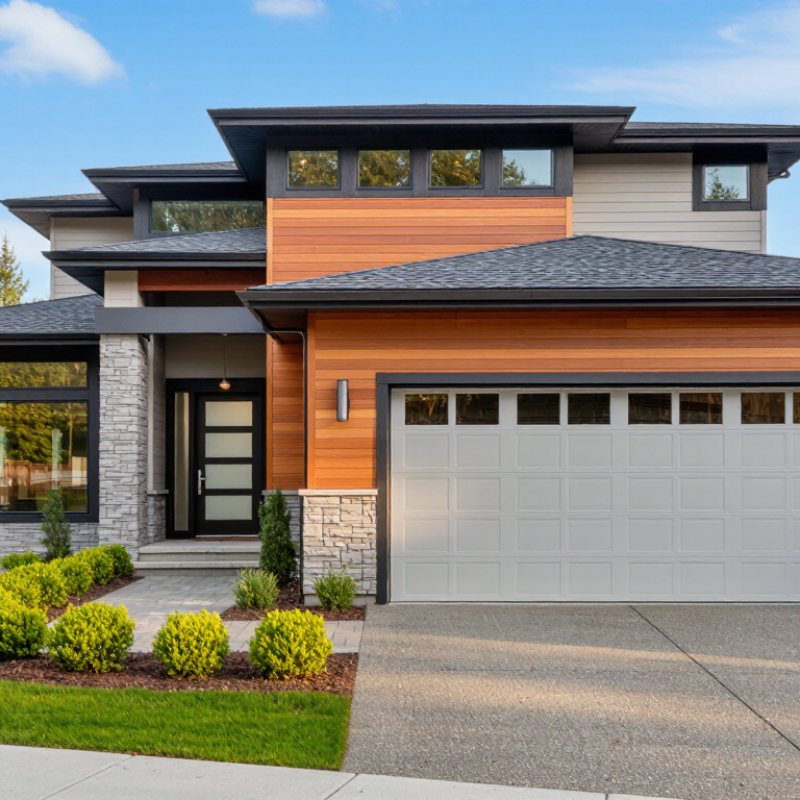
A garage door can cover a large part of a home’s street-facing façade, so its style affects curb appeal more than many owners expect. A row of narrow windows, raised panels, or a simple flush surface creates a different visual rhythm. That matters. The right choice helps the door feel connected to the house rather than added later.
Architectural fit comes from proportions and details, not labels alone. On a traditional home, recessed panels and modest window grids may echo existing trim. A contemporary façade often pairs more naturally with broad, uncluttered panels and restrained hardware. Look closely at nearby features: roof pitch, window shapes, siding lines, and the entry door. Matching every detail can feel forced, though. A subtle contrast may give the exterior more character.
Color and material influence the result, too. A warm wood-like finish can soften brick, while a muted gray may sit quietly beside stone or pale siding. Consider how the door will look in morning shade and strong afternoon sun; samples can shift noticeably outdoors. Maintenance deserves a place in the decision. Some finishes need more attention than others, and a striking design may become less appealing if upkeep feels burdensome.
Why Do Garage Door Styles Matter When Choosing a Door?
A garage door’s style affects more than curb appeal. Its material and construction can change how much heat enters or escapes through a large opening. A steel door with a foam core often slows heat transfer better than a thin, uninsulated panel. Solid wood has a substantial feel, but its performance depends on thickness, fit, and upkeep. Details matter.
Insulation ratings offer a useful comparison. A higher R-value generally indicates greater resistance to heat flow, which can help in cold winters and hot summers. But a rating alone can mislead. It may describe the panel, not the entire installed door. Gaps around the frame, worn bottom seals, and poor installation can let drafts in anyway. A cold draft by the floor is a clue.
Climate should guide the choice. In a damp region, ask how the door’s finish and core handle moisture, and check seals for a close fit. In places with large temperature swings, an insulated door may make an attached garage more comfortable. Still, the garage’s insulation and ventilation matter too. I would not treat one number as a verdict; it is only part of the decision. A useful check is to feel the inside panel on a cold morning and inspect the edges for daylight.
Higher R-value per inch generally means better resistance to heat flow. These approximate values vary with product formulation and temperature. A garage door’s overall climate performance also depends on insulation thickness, construction, perimeter seals, and installation quality; the door’s style alone does not determine its insulation.
Why Do Garage Door Styles Matter When Choosing a Door?
How Panel Design Influences Durability, Maintenance, and Operation
Panel design is more than decoration. Deep grooves and raised sections can collect dust, leaves, and moisture, making routine cleaning less convenient. Smooth panels are easier to wipe down, but dents may be more visible. A panel’s durability depends on its construction, not its appearance alone. Check the material, thickness, insulation, and reinforcement, especially if the door faces strong winds or frequent use. Small details matter.
Panel layout also affects how the door moves. Heavier insulated sections may need appropriately rated springs and hardware; a door that is poorly balanced can strain its opener. Decorative windows or added inserts may also create extra cleaning and sealing needs. The Door & Access Systems Manufacturers Association’s technical standards address sectional-door performance, so ask whether a proposed system meets applicable industry requirements. A style choice should fit the opening and hardware, not just the home’s façade.
There is a financial reason to choose carefully. Zonda’s 2024 Cost vs. Value report estimated an average U.S. garage-door replacement cost of $4,513 and a resale value of $8,751, or 194% of project cost. That figure covers a defined replacement project; it does not prove that one panel style will perform better or deliver the same return everywhere. It is tempting to judge by curb appeal alone. I would also compare cleaning effort, panel construction, and the door’s expected operating demands. A pretty groove is not a durability test.
| Panel style | Typical construction or appearance | Durability considerations | Maintenance considerations | Operation considerations |
|---|---|---|---|---|
| Flush | Flat, relatively smooth sections with minimal raised detail. | Fewer projecting details can reduce places where dirt or water collects. Resistance to dents still depends mainly on the panel material, thickness, and reinforcement. | Generally straightforward to wash; a smooth surface can make small dents or scratches more noticeable. | Panel shape alone does not determine balance or opener effort. Correct springs, tracks, and door weight are key. |
| Long-raised panel | Broad rectangular panels formed into the door sections. | Embossed shapes add contour but do not necessarily make a door stronger. Check for suitable reinforcement, especially on wide doors. | Raised edges and recesses may need extra attention during cleaning; inspect the finish for chips that could expose the substrate. | Typically operates like other sectional doors when properly installed and balanced; panel profile does not replace sound hardware. |
| Short-raised panel | Smaller, repeated raised rectangles across each section. | More formed details do not automatically improve impact resistance. Construction and material specifications are more reliable indicators. | Additional edges and recesses can collect dust and may take longer to clean than a flat surface. | Sectional movement is governed primarily by the door’s weight, balance, rollers, tracks, and spring system. |
| Carriage-house appearance | Decorative overlays, grooves, or hardware create the look of traditional swing-out doors; many versions are sectional overhead doors. | Attached decorative parts can be exposed to weather and impact. Their durability depends on attachment method, material, and finish. | Inspect decorative hardware and overlays for looseness, corrosion, or finish damage; clean crevices as needed. | A sectional version still travels overhead. Confirm that the decorative design does not conflict with clearances or the manufacturer’s hardware requirements. |
| Ribbed or grooved | Repeated horizontal or vertical ribs, grooves, or narrow channels. | Surface contours may help disguise minor marks, but they do not establish the door’s structural strength or wind resistance. | Grooves can trap dirt and moisture; periodic cleaning and finish checks are useful, especially in damp or coastal conditions. | Rib direction and appearance do not by themselves determine smoothness. Properly aligned tracks and maintained rollers matter more. |
| Insulated multi-layer panel | Panel sections with an insulating core between or behind outer skins; available in several surface profiles. | Layered construction can provide a more rigid panel than a comparable uninsulated skin, but performance varies by design and materials. | Keep the exterior finish intact and check seals around the door. Insulation does not eliminate the need for weather-seal maintenance. | Added weight can affect spring and opener sizing. The door must be balanced and operated with compatible hardware. |
Garage-door style affects more than appearance; it changes how a home meets the street.
The 2024 Cost vs. Value report from Journal of Light Construction estimates a national average replacement cost of $4,513 and a resale value of $8,751. That equals 194.1% of the project cost recouped.
That is striking. Still, the figure is an estimate, not a guaranteed profit or a promise for every home.
The report measures a defined replacement project, not every possible door style or local sale. A simple raised-panel design may suit a traditional house, while flush panels can look calmer on a modern exterior. Windows can bring daylight into a garage, but they may reduce privacy.
Match the door’s color and proportions to the siding, trim, and roof; a dramatic contrast can feel wrong in person. The number can tempt buyers to overread it. Local labor costs, the home’s condition, and neighborhood preferences all matter.
Check the project scope behind the estimate, and compare quotes for the same materials and installation work. A beautiful door is useful. A mismatched one is still a mismatch.
A garage door can occupy a large part of a home’s street-facing exterior, so its style affects more than curb appeal. Match the door’s panel shape and finish to the house, but consider what daily use demands. A heavy, wood-look door may suit a traditional façade; it can also cost more to maintain. Looks matter. So do clear sightlines, durable hardware, and a door that fits the opening correctly.
Budget decisions should include installation, insulation, and future upkeep, not just the quoted door price. Remodeling’s 2024 Cost vs. Value Report estimated an average $4,513 cost for an upscale garage door replacement and $8,751 in resale value. Those are national estimates, not a promise of profit. That distinction matters. A simpler design may be the wiser choice if it leaves room for proper installation and safety checks.
Ask the installer to explain the door’s safety features and test the reversing mechanism and photo-eye sensors before handover. Keep sensors unobstructed; a dusty lens or a storage bin in the beam’s path can prevent reliable operation. The Door & Access Systems Manufacturers Association publishes residential door safety guidance, including regular testing and maintenance. Insulation can help in an attached garage, though the benefit depends on climate and how the space is used. I would not choose a style from a sample alone. See it beside the actual siding, in daylight, before committing.