
What Are the 7 Best Garage Door Styles?
A garage door can occupy a large share of your home’s front elevation. Its style affects curb appeal, but it also shapes daily comfort, maintenance, and the way the house feels from the street. Architect and design author Sarah Susanka writes, “The Not So Big House is not about doing without, but about doing more with less.” That design principle can guide your choice: look for a door that suits the home, rather than choosing the boldest option by default.
There are many garage door styles, and each brings a different look. Carriage-house doors add visual detail. Modern designs favor clean lines and glass. Traditional raised-panel doors offer a familiar appearance. Wood, steel, aluminum, and composite materials also differ in upkeep, insulation, and durability. Small details matter. A row of windows can brighten a dim garage, while a dark finish may make a narrow façade feel heavier.
This guide compares seven popular options and explains what to consider before choosing. Check the garage opening, surrounding trim, local weather, and how much maintenance you can manage. Ask an experienced installer about fit, balance, and insulation. Photos can help, but they can also mislead; lighting and camera angles change how a door appears. The best choice is not always obvious. It should look right on your home and work well in everyday use.
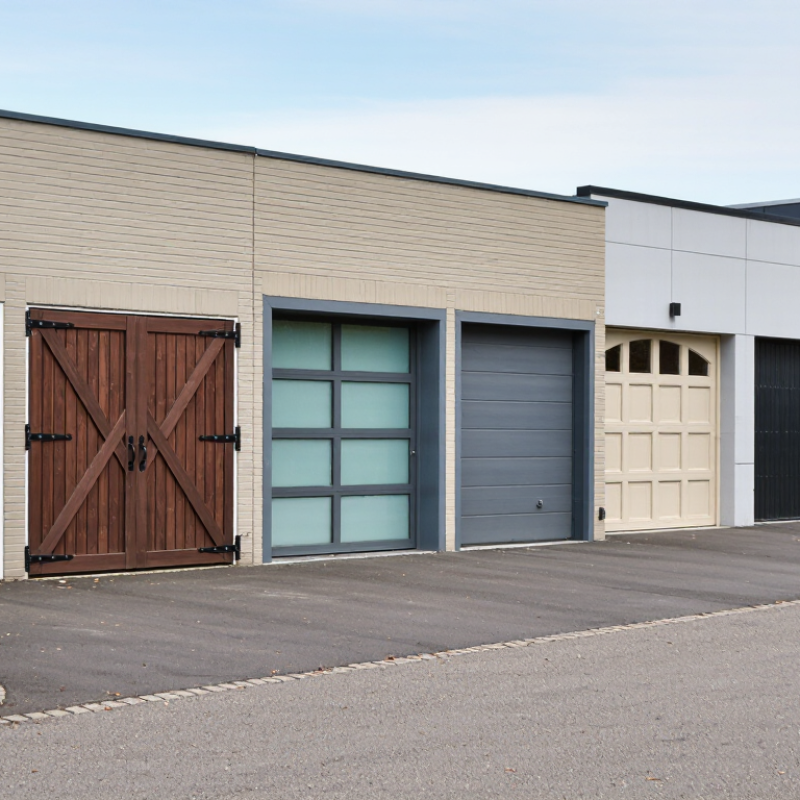
Key Features That Distinguish Garage Door Styles
Garage-door style comes from panel shape, surface texture, glazing, and material—not color alone. Raised-panel doors use repeating rectangles and suit many traditional homes. Flush panels create a clean, modern surface. Carriage-house doors echo old swing-out barn doors, though they usually lift overhead. Decorative hinges and handles strengthen the effect.
Other options change the façade in distinct ways. Ribbed steel emphasizes horizontal lines and tends to conceal small dents better than smooth finishes. Wood-plank doors show natural grain, but need more upkeep as weather changes. Full-view aluminum doors pair narrow frames with broad glass panels. Contemporary doors often mix glass, metal, and simple geometry. Light changes everything. Still, a glass-heavy design may reduce privacy, and a door that looks convincing in a small sample can feel overpowering across a wide opening.
Performance and value deserve equal attention. Insulation, weather seals, window placement, and the door’s weight affect comfort and operation. Zonda’s 2024 Cost vs. Value report estimated a national average garage-door replacement cost of $4,513 and a resale value of $8,751, or 194% cost recouped. That figure covers replacement projects overall, not a guaranteed return for any style or home. A practical choice should match the house, local weather, and maintenance tolerance; sometimes the least dramatic door is the one you live with best.
| Style | Key Features | How It Opens | Main Advantages | Things to Consider | Often Suited To |
|---|---|---|---|---|---|
| Traditional Raised-Panel | Rectangular raised sections create a familiar, dimensional appearance. Available in a range of materials, colors, and window layouts. | Usually a sectional door that travels on tracks and rests overhead when open. | Versatile design; widely available; panel details suit many traditional and transitional homes. | Decorative paneling may not match homes with a very minimalist exterior. Insulation depends on the door’s construction. | Homes seeking a classic, adaptable garage-door appearance. |
| Carriage-House | Designed to suggest old-fashioned swing-out carriage doors, often with decorative hardware, divided panels, or a crossbuck pattern. | Typically operates as a modern sectional overhead door, despite its swing-door appearance. | Adds period-inspired character while retaining the convenience of an overhead mechanism. | Decorative hardware and finishes can require upkeep. Confirm that the design complements the home’s exterior. | Craftsman, farmhouse, cottage, and other traditional-style homes. |
| Contemporary / Modern | Emphasizes clean lines and simple geometry; may combine metal, glass, or smooth-finish panels. | Commonly sectional, with the panels moving overhead on tracks. | Pairs well with modern architecture and can incorporate glazing for daylight. | Glass can reduce privacy and increase heat gain unless an appropriate glazing type is chosen. Material and finish affect maintenance needs. | Modern homes and exteriors with uncluttered lines. |
| Flush-Panel | Flat, minimally detailed panels create a smooth, understated door face. | Usually a sectional overhead door. | Simple appearance works with many exteriors and can be painted to coordinate with trim or siding. | Offers less visual texture than raised or carriage-house designs; the final look depends strongly on finish and proportions. | Minimalist, contemporary, or understated residential designs. |
| Side-Hinged | Two vertically arranged leaves are hinged at the sides and open like conventional doors. | Swings outward from the garage opening. | Provides direct pedestrian access and leaves the ceiling area clear of overhead door panels and tracks. | Needs clear space outside the garage for the leaves to swing. Wind, uneven ground, and automation requirements should be considered. | Garages where overhead clearance is limited and exterior swing space is available. |
| Tilt-Up Canopy | A single rigid panel rather than multiple hinged sectional panels. | The panel tilts outward and upward; when open, part of it may project beyond the front of the garage. | Simple, single-panel construction and a clean uninterrupted door face. | Requires suitable clearance as the panel moves outward. Its opening mechanism differs from standard sectional systems. | Garages designed for a one-piece door and with adequate exterior clearance. |
| Roll-Up | Narrow horizontal slats form a flexible curtain that coils above the opening. | Rolls vertically into a compact coil rather than traveling along long horizontal tracks. | Can conserve overhead space and is well suited to frequent operation in many commercial settings. | Appearance and insulation performance vary by product. Check opening dimensions, coil clearance, and intended residential or commercial use. | Commercial or utility spaces, and residential garages where overhead track space is limited. |
FAQS
Raised panels create crisp shadows and visible depth. Recessed panels sit inward, giving the door a flatter, quieter look.
They borrow cross-bracing, divided windows, and dark decorative hinges from old barn doors. Most modern versions still lift overhead.
Not exactly. Contemporary designs use simple shapes and practical materials. Flush-panel doors have flat sections without raised shapes.
Large panes bring daylight into a garage and can connect it visually to a patio or workshop. Small details matter.
Clear glass may expose stored items, especially at night. Frosted or tinted glazing can help, but it changes the appearance.
Check insulation ratings, frame strength, and the local climate. Glass can be heavy, so the opener and tracks must suit it.
A 2024 national report estimated an average cost of $4,513 and resale value of $8,751. That equals 194% cost recouped, but it is not a style comparison. Local costs and home design can change the result.
Compare samples outdoors and check the door beside your windows and trim. A photo can mislead me; I would still want to see the finish in daylight.