What Types of Wood Look Garage Doors Are Available?
Wood look garage doors offer the warmth of timber without requiring the same level of upkeep as many natural wood doors. Their appearance can range from subtle oak grain to deep, rustic barn-board textures. The difference is not only visual. A door’s core material, surface finish, insulation, and construction all affect its weight, durability, and maintenance needs. Small details matter, too. Raised panels, window placement, and trim can make a door feel traditional, modern, or somewhere between.
Common options include steel doors printed or embossed with wood grain, steel doors with faux-wood overlays, composite doors, and fiberglass designs. Each creates a different balance of appearance, cost, and resistance to moisture or dents. Steel is often chosen for strength and low maintenance, while composite and fiberglass can provide more pronounced textures or layered designs. Product quality varies, so compare specifications rather than relying on photographs alone. Ask how the finish handles sun exposure, what care it requires, and whether replacement panels are available. A sample can help. Still, it may look different across a full door or in changing light. The right choice depends on your home’s style, local weather, budget, and expectations for everyday use. This guide explores the main types and the practical trade-offs worth considering before you choose.
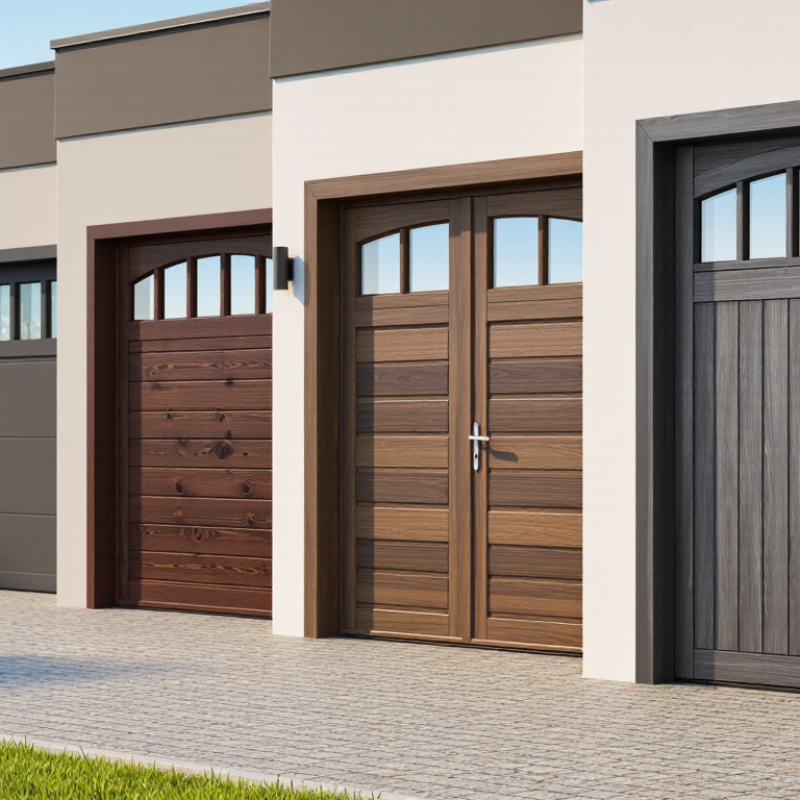
Core Materials Used in Wood-Look Garage Doors
Wood-look garage doors use several materials to create a timber appearance without relying on solid wood. Steel is a common base: its surface can be embossed with a wood-grain pattern and finished in layered colors. The texture catches light along the panel grooves, though close inspection may reveal a repeated pattern. Steel is generally sturdy and needs less routine upkeep than natural wood. Looks convincing. Not identical.
Composite overlays, often made with resin or plastic-based materials, can add deeper grain and raised details over a door’s frame. Fiberglass panels can also imitate wood, and they resist moisture, but impact damage may be harder to repair cleanly. These surfaces vary in thickness and finish, so appearance alone does not reveal how the door is built. Insulation is a separate choice: many doors use polystyrene or injected polyurethane between their outer layers. Ask how the core, joints, and finish handle local temperature swings. A dark finish may absorb more heat, and that practical detail is easy to overlook.
What Types of Wood-Look Garage Doors Are Available? — Core Materials Used in Wood-Look Garage Doors
| Core Material |
How the Wood Look Is Created |
Typical Advantages |
Key Considerations |
| Steel |
Embossed wood-grain texture, printed finishes, or a durable decorative coating gives the steel panels a wood-like appearance. |
Strong, widely available, and generally lower-maintenance than natural wood. Insulated versions can improve thermal performance. |
Finish quality and steel thickness vary. Scratches or damaged coatings may expose metal to corrosion, so repairs should be addressed. |
| Steel with composite overlay |
Composite boards or panels with a wood-like surface are attached to a steel door or supporting frame. |
Combines a steel structure with more pronounced panel depth and texture than a printed or embossed finish alone. |
Weight, upkeep, and weather resistance depend on the overlay material and how it is attached. Check the door’s maintenance requirements. |
| Fiberglass |
Molded fiberglass skins reproduce wood grain and may be fitted over a metal frame or another supporting structure. |
Can create detailed wood-like profiles and does not rust. It is generally less vulnerable to moisture-related decay than natural wood. |
Fiberglass can crack or be damaged by a strong impact. Its finish and resistance to sunlight vary by product and exposure. |
| Aluminum |
Wood-look coatings, films, or textured finishes are applied to aluminum panels or frame components. |
Lightweight and naturally resistant to rust, making it useful where reducing door weight is a priority. |
Aluminum may dent more easily than steel. Insulation, finish durability, and panel rigidity depend on the door’s construction. |
| Engineered wood or wood composite |
Manufactured wood-based panels or molded composite components are shaped and finished to resemble traditional wood designs. |
Can provide a substantial, textured appearance and detailed panel designs. Some products use a separate core or frame for support. |
Materials differ significantly in composition and moisture resistance. Follow the manufacturer’s guidance for sealing, painting, and maintenance. |
Note: “Wood-look” describes the appearance, not a single construction method. A door may combine several materials, and insulation, finish durability, and maintenance needs vary by design.
Steel Garage Doors with Wood-Grain Finishes
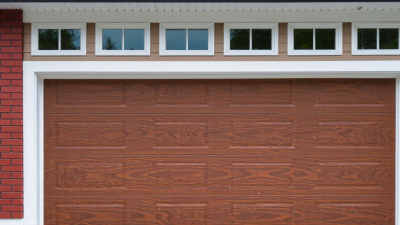
Steel garage doors with wood-grain finishes pair a steel skin with a surface designed to suggest timber. The grain may be embossed into the panel, printed, or created with a textured coating, depending on the door’s construction. Color choices often range from pale oak-like tones to deep walnut shades. This look can add warmth to a facade without the upkeep associated with exposed wood.
Look closely at the grain pattern before choosing. Repeated knots or overly even lines can seem artificial across a wide door. Ask for a full-size sample, if available, and view it outdoors; indoor lighting can shift the finish’s color. Still, it is not real timber. That distinction matters. A deep scratch may expose the steel beneath, so avoid abrasive cleaning and check the care instructions.
Performance depends on more than appearance. Compare panel construction, insulation values, weather seals, and hardware, especially if the garage shares a wall with living space. A factory finish can stand up to routine exposure, but no coating is maintenance-free. Rinse off grit and inspect edges for chips after seasonal changes. One drawback: darker finishes may show dust and surface marks sooner.
Composite and Fiberglass Wood-Look Garage Doors
Composite and fiberglass doors can imitate the warmth of wood without using solid-wood panels throughout. Composite designs often use molded or laminated surfaces over a sturdy door structure. Their grain patterns may look convincing from the driveway, especially in medium stains. Up close, repeated knots or grooves can reveal the pattern. That matters.
Fiberglass panels are lightweight and resist moisture, so they can suit damp climates or homes where wood might swell. Many have a textured finish that resembles cedar or oak. Sun exposure can still fade some finishes over time, and a sharp impact may crack a panel. Ask how the door’s finish can be repaired before choosing a color.
Both materials need less routine upkeep than natural wood, but neither is maintenance-free. Rinse away dirt, check seals, and follow the maker’s care guidance. Look at a full-size sample outdoors, not just a small indoor swatch; daylight changes the tone. Also compare insulation, panel construction, and hardware, since the surface alone does not determine comfort or durability. One trade-off is easy to miss: a highly realistic texture may cost more, while a simpler finish can look flatter at close range.
What Types of Wood-Look Garage Doors Are Available?
Composite and fiberglass doors can both be made with wood-grain appearances, but their materials differ.
The chart identifies typical material characteristics, not performance ratings. Composite doors commonly use engineered wood fibers or polymers; fiberglass doors use glass-fiber-reinforced material. Either type may feature molded or embossed wood-grain patterns. Construction and finishes vary by door.
Wood-Look Designs: Overlay, Carriage-House, and Modern Panels
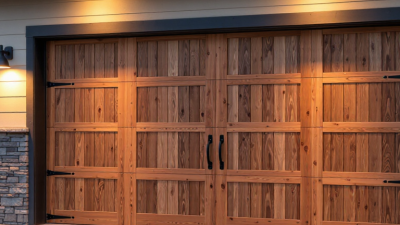
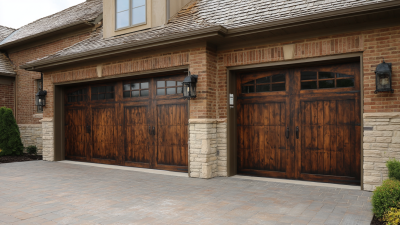
Wood-look garage doors are commonly offered as overlay, carriage-house, and modern-panel designs. Overlay doors add decorative boards or molded panels over a base door, creating depth and shadow without using solid timber. The layered edges can resemble hand-built joinery. They also collect dust, so cleaning those grooves is part of upkeep. Carriage-house styles borrow the appearance of swing-out barn doors, often with arched panels, crossbuck patterns, or dark decorative hardware. They operate overhead, though, which matters when driveway clearance is limited.
Modern panels favor clean lines: broad horizontal sections, restrained grain patterns, and sometimes narrow window bands. They suit contemporary homes, but strong wood grain can look artificial across a large, smooth surface. Ask to see a full-size sample outdoors; grain and color shift noticeably between shade and direct sun. Details matter. Insulated steel or composite constructions can imitate wood while avoiding some routine refinishing, but exposure and finish quality still affect long-term appearance.
A useful market reference is the 2024 Cost vs. Value Report from Zonda, which estimated a 194% cost recoup on a garage-door replacement project. Its national averages were $4,513 in project cost and $8,751 in resale value. These figures describe a modeled renovation project, not a guaranteed return for every home or a comparison of wood-look styles. Choose a design that fits the house, then check the door’s construction, insulation, finish warranty, and maintenance instructions. One detail is easy to overlook: decorative hardware should not obstruct the door’s moving sections.
How Materials and Finishes Affect Performance
Wood-look garage doors can use steel, fiberglass, composite, or real wood with a grain finish. The material beneath the surface affects durability more than the printed grain does. Steel panels resist everyday weather and need little upkeep, but a hard impact can leave a dent. Fiberglass and composite options often resist moisture well, though extreme temperature changes may affect some products. Real wood offers natural variation, but it needs regular sealing and closer attention to moisture.
Finishes shape both appearance and performance. A factory-applied coating can help shield steel from moisture and fading, while textured surfaces may hide small marks better than smooth ones. Dark colors can absorb more heat in direct sun, which may matter on an exposed garage. Check the finish warranty and care instructions, since cleaning products or repainting can affect the coating. Wood-look is convincing from the driveway; up close, repeated grain patterns may still show.
Tips: Compare a door sample outdoors, not only under showroom lights. Ask how often the finish needs cleaning or touch-ups. Also check insulation and panel construction; a wood-like surface alone does not keep a garage comfortable. One detail is easy to overlook: a beautiful finish can still age unevenly where sunlight hits hardest.