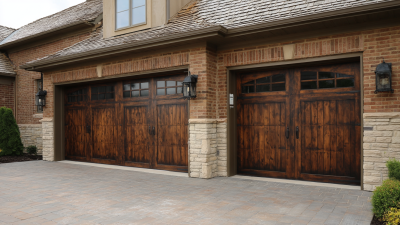
How to Choose Wood Look Garage Doors?
Choosing wood look garage doors is not merely a style decision. It affects curb appeal, maintenance, insulation, security, and long-term value. The garage door may occupy a large portion of the front elevation. Tom Wadsworth, a former technical director of the International Door Association, describes it as “the largest moving object in your home.” That detail deserves more attention.
Market evidence supports careful selection. Zonda’s 2024 Cost vs. Value Report found that garage door replacement recovered about 194% of its cost nationally, making it the report’s highest-return exterior project. However, this figure covers garage doors generally, not wood look garage doors specifically. That distinction matters. A convincing wood appearance may increase visual appeal, but it does not automatically improve construction quality.
This guide will compare steel, composite, fiberglass, and real-wood options. It will examine embossed grain, stain-like finishes, insulation values, wind ratings, hardware, and replacement panels. Hold a sample beside your brick, siding, or stone before ordering. Printed colors can look warmer indoors. They can appear flat in direct sunlight.
Think about maintenance, too. Real wood may need periodic sealing. Steel and composite doors usually require less care, but their finishes can still fade or scratch. The “best” choice is not universal. A coastal homeowner, a snowy homeowner, and a busy rental-property owner may need different doors. Some advice sounds confident but lacks local testing. Check manufacturer specifications, independent warranties, and installer credentials before trusting the showroom display.
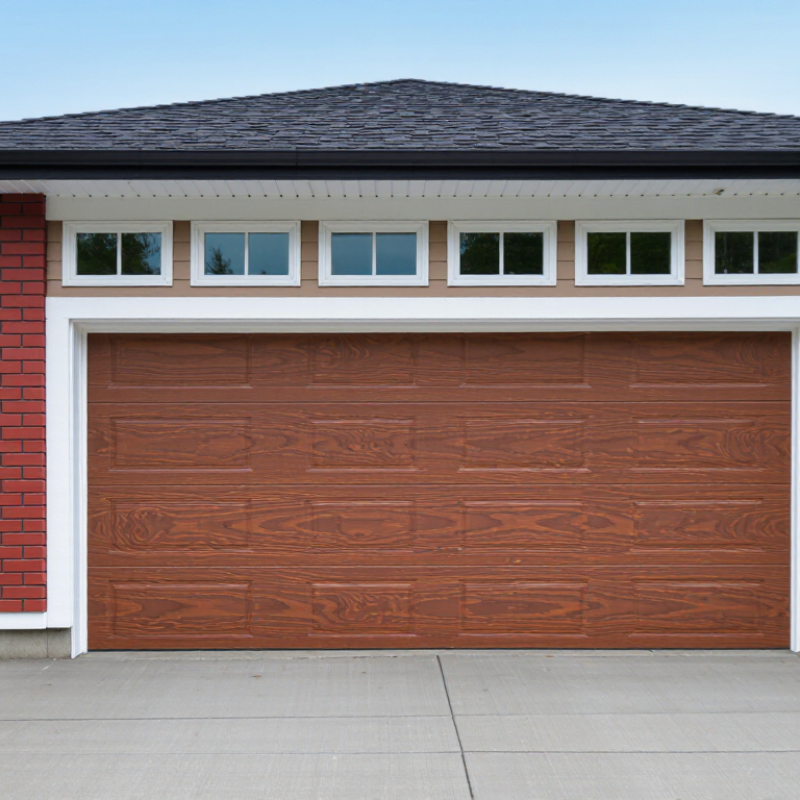
Define Wood-Look Construction: Steel, Composite, Fiberglass, or Real Wood
How to Choose Wood Look Garage Doors?
Wood-look construction determines how a garage door performs, not just how it appears. Steel doors offer strong security and stable panel alignment. Their embossed grain can look convincing from the driveway. However, thin steel may dent after a careless impact. Check the gauge, insulation, and protective coating before choosing.
Composite doors use engineered wood fibers or resin-based materials. They often resist moisture, insects, and splitting better than natural wood. Fiberglass can imitate deep grain patterns and stays relatively light. It may suit humid coastal areas, though severe impacts can crack the outer skin. Real wood provides unmatched texture, warmth, and repairability. It also demands regular sealing, especially around the bottom rail and panel joints. Skipping one maintenance season can leave gray patches or swollen edges.
Feel the surface in person. Look closely at corners, window frames, and decorative hardware. These areas reveal whether the wood effect feels realistic or overly flat. Consider your climate, driveway space, and daily use. A busy household may value steel’s durability over authentic texture. A shaded, dry garage may make real wood easier to maintain. I would not choose by photographs alone. Lighting can hide uneven grain and weak finishes. Even experienced buyers can overlook water paths beneath decorative trim. Ask for finish samples, warranty terms, repair procedures, and expected repainting intervals. Then compare the door’s weight with your opener’s rated capacity.
Measure the Opening, Sideroom, Headroom, and Backroom Before Ordering
How to Choose Wood Look Garage Doors?
A wood look garage door can add warmth without the maintenance of natural wood. Before ordering, measure the opening carefully. Record the width and height at several points. Older frames are often uneven. Do not trust one measurement.
Measure the opening from the finished floor to the underside of the header. Check both sides, too. Sideroom is the clear space beside the opening for vertical tracks, brackets, and cables. Remove stored tools temporarily. A few inches can change the hardware choice. Measure from the opening edge to the nearest wall, pipe, light switch, or shelving. Small obstructions matter.
Next, measure headroom from the top of the opening to the ceiling or lowest obstruction. Include beams, openers, and hanging lights. Backroom is the distance from the garage opening to the rear wall. It must accommodate the door height, tracks, and opener system. Keep the tape level. Mark each result on a simple sketch.
Measure twice. Then measure again.
In practice, a flashlight reveals pipes that are easy to miss. Take clear photos of the ceiling and side walls. I have found that quick sketches can still contain errors, especially in older garages. Ask a qualified installer to verify your dimensions against the selected door and hardware configuration. Wood-look designs may use heavier panels, so the support system deserves careful review. Accurate measurements protect your budget, installation schedule, and daily use.
Compare Insulation Ratings: Typical Garage Doors Range from R-6.5 to R-18.4
How to Choose Wood Look Garage Doors?
Compare Insulation Ratings: Typical Garage Doors Range from R-6.5 to R-18.4
A wood-look garage door can create warmth without the upkeep of real timber. Its insulation rating deserves equal attention. Typical garage doors range from R-6.5 to R-18.4. A higher R-value generally slows heat transfer more effectively. This matters when the garage shares walls with bedrooms or living areas.
I once assumed appearance and insulation were separate decisions. That was too simple. A door rated R-6.5 may suit an unheated storage garage in a mild climate. An R-12 door offers a more balanced choice for many homes. R-18.4 can make sense in colder regions, workshops, or attached garages used daily.
Check the construction, not only the number. Polyurethane cores usually provide stronger insulation than thinner, loose-fill designs. Examine the bottom seal, side weatherstripping, and joints between panels. Small gaps can weaken the practical performance of an expensive door. Windows also affect heat loss, especially when they use single glazing.
Ask how the rating was tested. Different testing methods can make comparisons less direct. Request written specifications and installation guidance from the seller or installer. A poorly fitted high-R door may perform worse than a carefully installed mid-range model. Measure the garage temperature on a winter morning. That simple observation may reveal more than showroom lighting. Keep the wood-grain finish in view, but do not let it hide the thermal details.
Verify Wind Resistance Using Local ASCE 7 Loads and ASTM E330 Testing
How to Choose Wood Look Garage Doors?
A wood-look garage door should match your home, but appearance cannot replace wind engineering. Local wind risk comes from more than average weather. ASCE 7-22 uses site-specific factors, exposure categories, building risk, and mapped speeds. For Risk Category II buildings, its ultimate wind maps generally use a 700-year mean recurrence interval. Higher-risk buildings use stricter intervals. Ask a qualified professional to confirm the correct design pressure for your address.
This matters most near coastlines, open fields, and hurricane-prone regions. A door rated for one location may fail elsewhere. Small details matter. Reinforced tracks, stronger rollers, braced sections, and properly anchored hardware help the complete assembly resist pressure. Decorative overlays can add weight and change performance, so the tested configuration must match the installed door.
Look for ASTM E330/E330M testing documentation. This standard evaluates windows, doors, and similar assemblies under uniform static air pressure. The report should identify positive and negative pressures, deflection, leakage, and permanent deformation. ASTM E330 is not a debris-impact test. That limitation deserves attention. FEMA P-361 guidance also treats windborne debris protection as a separate concern in vulnerable areas. Ask for the test size, pressure value, support conditions, and laboratory report—not only a marketing rating. A wood texture is attractive. The structure must still do the hard work.
Choose Hardware Rated for at Least 10,000 Operating Cycles
How to Choose Wood Look Garage Doors?
A wood look garage door can add warmth without the maintenance of real timber. Yet appearance should not lead the decision. Hardware carries the daily load. Choose springs, rollers, hinges, cables, and openers rated for at least 10,000 operating cycles. DASMA technical guidance defines one cycle as one complete opening and closing sequence. Its residential recommendations commonly use 10,000 cycles as a baseline rating.
Consider your household routine. At two cycles daily, 10,000 cycles equals about 13.7 years. At six cycles daily, the same rating may last only 4.6 years. The estimate is not perfect. Weather, door weight, poor balance, and neglected lubrication can shorten service life. Ask for written cycle ratings, not vague phrases like “heavy duty.” Inspect the bottom brackets and spring area closely. Those parts often show wear before the decorative panels do.
The 2024 Cost vs Value Report recorded a 194.6% cost recoup for upscale garage door replacement, but it measured resale value, not hardware lifespan. That distinction matters. A convincing wood grain cannot compensate for noisy rollers or a weak spring system. During installation, request a balance test and verify that the door stays open halfway without drifting. Small details count. Industry guidance also recommends periodic professional inspection, especially when cables appear frayed or springs show gaps. My earlier instinct would have been to prioritize finish first. That was incomplete. A durable door should look convincing at the curb and operate reliably in the garage.
How to Choose Wood Look Garage Doors? Choose Hardware Rated for at Least 10,000 Operating Cycles
One operating cycle means opening and closing the garage door once. For reliable daily use, choose springs, rollers, hinges, and related hardware rated for at least 10,000 cycles. Higher cycle ratings can be a practical choice for homes with frequent door operation.