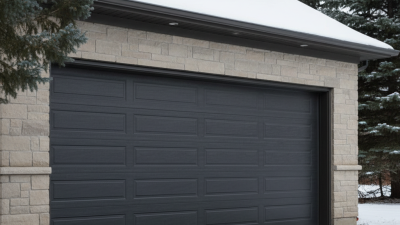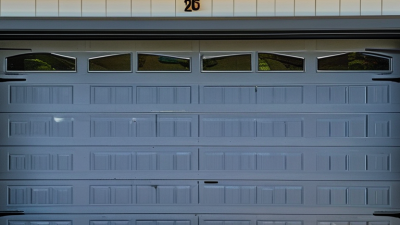
Choosing the best insulated garage doors from China requires more than comparing prices or surface finishes. The right product should balance thermal performance, structural strength, weather resistance, and dependable manufacturing. In practical use, a well-built door can reduce drafts, soften outdoor noise, and help stabilize temperatures inside the garage. However, insulation claims can be confusing. A thick panel does not automatically provide better protection.
This guide examines insulated garage doors through measurable details and real installation concerns. We will consider panel thickness, core materials, R-value, sealing systems, wind resistance, spring quality, and track alignment. We will also look at factory experience, quality-control procedures, customization options, and export documentation. A reliable Chinese manufacturer should provide clear specifications, product samples, test reports, and consistent communication. Factory photos alone are not enough.
Small details matter.
For example, a door may look excellent in a showroom but perform poorly with weak bottom seals. Condensation, uneven gaps, and noisy operation can appear after installation. That possibility deserves attention. Buyers should verify hardware standards, warranty terms, replacement-part availability, and installation guidance before placing an order. Certification can support credibility, but it should match the actual model being purchased. Some suppliers may present broad factory capabilities without proving specific production experience. That assumption can fail.
The following overview will help homeowners, contractors, and importers compare Chinese suppliers more carefully. It does not promise one universal winner. Garage conditions, climate, budget, and project size all influence the final choice.
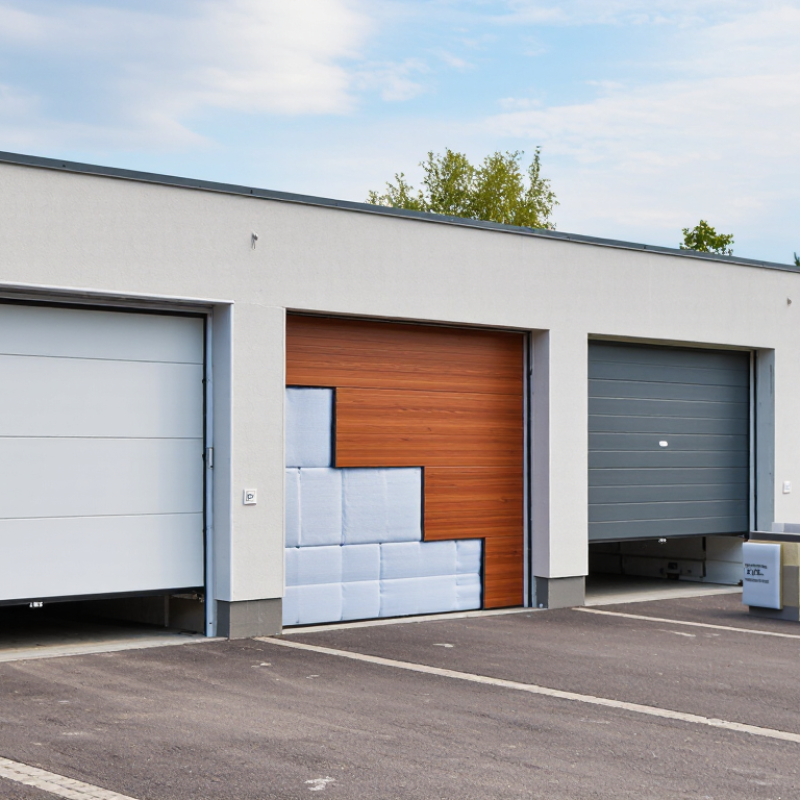
Steel insulated garage doors remain a practical choice for many Chinese projects. Their galvanized surfaces resist everyday moisture, while the rigid structure handles frequent opening cycles. A 40–50 mm polyurethane panel can reduce heat transfer and outside noise. However, heavier steel needs stronger tracks, hinges, and spring systems. Poor alignment may create scraping sounds or uneven gaps.
Aluminum doors offer a lighter alternative. They suit coastal areas and modern homes because aluminum resists rust and supports wider glazed sections. Their lower weight can reduce motor strain. Yet aluminum transfers heat more easily than insulated steel unless the frame includes thermal breaks. Thin sections may also dent under impact. A careful inspection matters.
Panel thickness is not the whole story. Core density, sealing quality, joint design, and installation accuracy affect real performance. A 50 mm panel with weak seals may perform worse than a well-fitted 40 mm system. In supplier evaluations, request panel cross-sections, thermal data, cycle-test records, and hardware specifications. Check whether stated U-values use the same test method. Some figures look impressive but lack useful context. Measure the opening, review local weather, and match the door weight to the operator. I would not choose by thickness alone.
For Chinese garage doors, polyurethane and polystyrene offer different insulation results. Polyurethane foam usually provides a higher R-value within the same panel thickness. Its closed-cell structure also limits heat movement and air leakage. Some high-density polyurethane panels report thermal conductivity at or below 0.024 W/m·K. That figure needs verification. Ask for test conditions, density, thickness, and the applicable standard.
Polystyrene is often more economical and easier to process. However, its conductivity commonly exceeds 0.024 W/m·K, especially in basic expanded grades. Extruded polystyrene can perform better, but panel design still affects the final result. A thicker polystyrene panel may approach the resistance of thinner polyurethane.
R-value is not the whole story. Seals, steel layers, windows, hinges, and thermal bridges can reduce real-world performance.
During supplier evaluation, request a complete door assembly report rather than foam data alone. Check whether testing follows recognized methods, such as ISO 8301 or EN 12667. Inspect sample panels for uniform foam filling, straight joints, and compressed perimeter seals. Small gaps matter. A quoted R-value may describe the core, not the installed door. This distinction is easy to miss. Climate, opening frequency, and garage heating should guide the specification. A higher R-value can still disappoint when installation is careless or the seal hardens in winter.
When comparing insulated garage doors from China, examine the complete door assembly, not the panel alone. U-factor measures heat transfer through the door. Lower values usually indicate better insulation. However, a published panel rating may exclude the frame, seals, windows, and hardware. Ask for tested assembly data from an accredited laboratory. Check the test method, specimen size, and indoor-to-outdoor temperature difference.
Air leakage deserves equal attention. A well-insulated door can still waste energy if cold air enters around its edges. Inspect the bottom seal, side weatherstripping, and header seal closely. Compression should remain consistent when the door closes. On a windy day, a thin tissue strip can reveal movement around weak points. This is not a laboratory test, but it exposes installation problems quickly. Door alignment matters more than many buyers expect.
Thermal bridges often occur at steel rails, hinges, fasteners, and poorly insulated frames. These areas may create cold lines on the interior surface, especially during winter. Look for thermal breaks, insulated end caps, and continuous frame seals. Infrared imaging can help, but readings change with sunlight, humidity, and surface finish. That limitation is easy to overlook. In my experience, the best specification sheet means little without careful installation. Request drawings, test reports, replacement seal details, and evidence that performance remains stable after repeated opening cycles.
For insulated garage doors from China, wind-load performance deserves more attention than panel thickness or foam density. ASCE 7 calculates design wind pressures from location, building height, exposure, importance, and openings. It is not a garage-door product standard. A reliable supplier should provide calculations for the actual opening, not a generic pressure figure. Ask for positive and negative pressure results, test methods, and the door’s full assembly details.
Small parts matter.
A 2.4-by-2.1-meter door may fail at its tracks, hinges, rollers, or anchors before its insulated panels bend. During factory evaluation, inspect deflection, lock engagement, seal contact, and repeated cycling after pressure testing. For European projects, EN 13241 covers industrial, commercial, and garage doors, while wind-resistance classification is commonly linked to EN 12424. Request the declared wind class and supporting test documentation. Check whether the stated class applies to the complete door size you will install.
Documents can still be incomplete. I have seen attractive test sheets omit edge conditions or mounting details. That gap deserves a written clarification before purchase. Compare the report with your site’s exposure, especially near coastlines, open fields, and tall buildings. Also confirm whether the Chinese factory builds reinforced end plates, thicker tracks, and stronger fastening points for higher pressure zones. A cheaper door may still work, but only when its tested limits match the building’s calculated demand.
When assessing insulated garage doors from China, cycle-rated hardware deserves close attention. A 10,000-cycle system may suit a lightly used home, while 25,000 cycles offers more confidence for busy garages. The number is not a promise of unlimited service. It depends on door weight, spring balance, humidity, and maintenance. In factory inspections, I look for documented cycle testing, measured spring torque, and replacement records. A worn roller can make a strong door feel unreliable.
Safety details matter just as much. Check for tested photoelectric sensors, emergency release systems, finger protection, and controlled closing speed. Insulated panels should resist deformation around hinges and fastening points. Ask whether tests cover the complete door assembly, not only one component. A certificate with a familiar logo is not enough. Verify its issuer, validity, product model, and testing scope. Quality systems such as ISO 9001 can support consistency, but they do not replace product safety testing.
Factory credibility becomes clearer through evidence. Request serial-number traceability, inspection photos, material specifications, and sample test reports. A responsible supplier should explain how failed units are handled. I have found that small details, such as uneven gasket compression or loose hinge screws, often reveal larger process problems. Cycle ratings still require judgment. Even a 25,000-cycle door may fail early if installation is poor. That uncomfortable possibility should remain part of the purchasing decision.