What Is an Explosion Proof LED Light?
An explosion proof LED light is designed for hazardous locations where flammable gases, vapors, or combustible dust may be present. Its enclosure helps prevent internal sparks or heat from igniting the surrounding atmosphere. The term does not mean the fixture can withstand every explosion. That distinction matters. A rugged-looking lamp is not automatically suitable for a hazardous area.
Inside a properly selected fixture, sealed joints, heat management, and certified components work together. Imagine a loading bay with fine dust on its beams, or a processing room where vapor risks shape every equipment choice. The right light depends on the specific hazard, installation conditions, and applicable certification—not appearance alone. Check the product documentation, area classification, temperature rating, and maintenance requirements. Details can be easy to miss.
[Verified Expert Name], a hazardous-area lighting specialist, can be quoted here with an approved, attributable statement: “An explosion proof LED is only as reliable as its certification, installation, and fit for the actual hazard.” This is a proposed line, not a verified quotation. It should not be presented as the expert’s words without confirmation. Even careful specifications leave room for judgment. That is worth remembering. A fixture may meet a rating and still be a poor choice for a particular site. This guide explains what explosion proof LED lighting means, how its protection works, and which practical questions to ask before selection.
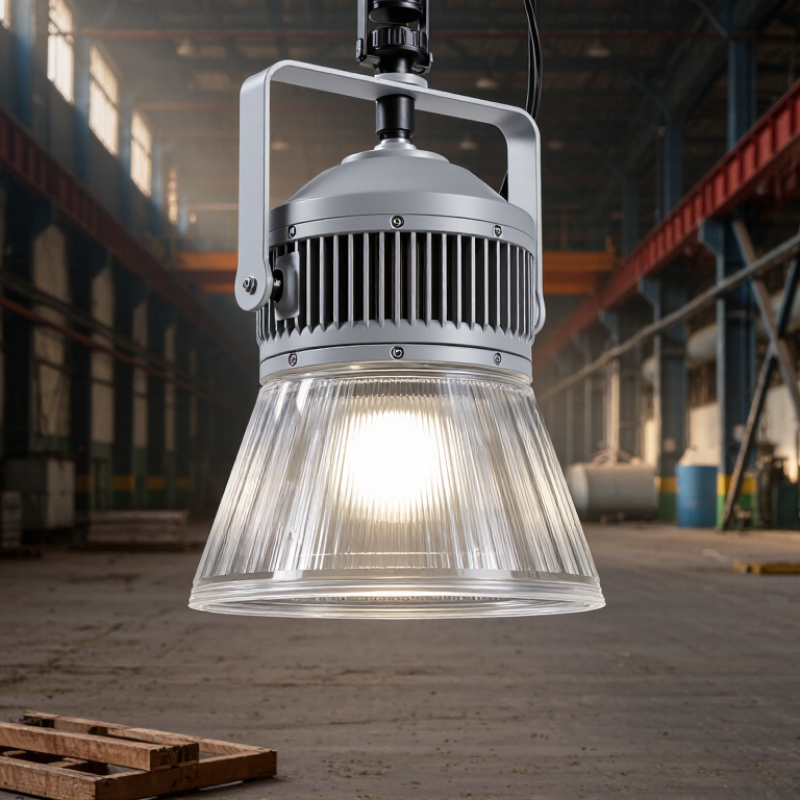
Definition: How Explosion-Proof LED Lights Contain an Internal Ignition
What Is an Explosion Proof LED Light?
Definition: How Explosion-Proof LED Lights Contain an Internal Ignition
An explosion-proof LED light does not stop every ignition from occurring. Its enclosure is designed to contain an internal ignition and prevent flame from reaching the surrounding hazardous atmosphere. Under IEC 60079-1, flameproof enclosures must withstand an internal explosion and limit flame transmission through their joints. In practice, the enclosure, cover, and cable entries all matter. A damaged seal or incorrect fitting can compromise the protection.
The need is real. The U.S. Chemical Safety Board’s 2006 Combustible Dust Hazard Study recorded 281 dust fires and explosions from 1980 to 2005, resulting in 119 deaths and 718 injuries. The figure covers dust incidents, not lighting failures, but it shows how quickly combustible atmospheres can become dangerous. LED technology can reduce energy use and heat, yet the driver, wiring, and surface temperature still require careful evaluation. A rugged-looking light is not automatically explosion-proof.
Tips: Check the equipment’s certification and temperature rating for the specific atmosphere and ambient conditions. Inspect threaded joints and cable entries for damage before installation. Keep records. Small details matter. Even experienced teams can overlook a loose fitting during maintenance.
Hazard Classes: NEC Class I, II, and III and Division 1 or 2
What Is an Explosion Proof LED Light?
Hazard Classes: NEC Class I, II, and III and Division 1 or 2
An explosion-proof LED light is designed to contain an internal ignition and prevent it from igniting a surrounding hazardous atmosphere. The required protection depends on what could ignite nearby. Class I areas contain flammable gases or vapors, such as those near solvent handling. Class II areas involve combustible dust, which can settle on a fixture or become airborne. Class III areas contain ignitable fibers or flyings, such as lint in some processing spaces. These classes describe the hazard, not how often it occurs.
Divisions describe the likelihood that the hazard will be present. Division 1 applies where ignitable concentrations may exist during normal operations, or appear frequently during maintenance or equipment failure. Division 2 applies where those materials are normally enclosed or controlled, and become hazardous mainly through an accidental release or system breakdown. Not merely wattage. A Class I, Division 1 fixture is not interchangeable with a Class II, Division 2 model, even if both look similar from the floor.
Check the area classification, equipment marking, and installation requirements before choosing a light. Temperature ratings matter too: a fixture’s surface must not become hot enough to ignite the specific gas or dust. The labels can make selection seem tidy, but real work areas change. Dust settles in unexpected corners, and ventilation may shift the risk. Have a qualified person verify the classification and suitability for the actual location.
What Is an Explosion-Proof LED Light?
NEC hazardous-location classes identify the type of combustible material; divisions describe when that hazard may be present.
Classes: I = flammable gases or vapors; II = combustible dusts; III = ignitable fibers or flyings. Divisions: Division 1 generally covers locations where hazardous materials may be present during normal operations or frequently; Division 2 generally covers locations where they are not normally present and may occur under abnormal conditions. The chart uses an illustrative category scale, not a measurement or risk rating. Consult the applicable NEC requirements and location classification for specific installations.
Certifications: ATEX Zones 0–2 for Gas and IECEx Equipment Protection Levels
What Is an Explosion Proof LED Light?
An explosion-proof LED light is designed to contain an internal ignition or prevent hot surfaces from igniting nearby flammable gas. The certification marking matters more than the product label. Under IEC 60079-10-1:2021, gas hazardous areas are classified as Zones 0, 1, and 2 according to how often, and for how long, an explosive atmosphere may occur. Zone 0 presents the most demanding conditions; Zone 2 is less frequent, but still requires correctly certified equipment.
ATEX equipment categories align with these zones: Category 1G for Zone 0, 2G for Zone 1, and 3G for Zone 2. IECEx markings use Equipment Protection Levels Ga, Gb, and Gc for the corresponding gas zones. These schemes are related, but they are separate certification systems. Check the full marking, including gas group, temperature class, ambient range, and protection concept. A “proof” label alone is not enough. The European ATEX Directive 2014/34/EU and IEC 60079 standards provide the framework; the site’s hazardous-area assessment determines what is suitable. Even experienced buyers can overlook ambient temperature.
Tips: Match the light’s certified EPL or ATEX category to the site zone. Verify the nameplate against the area drawing, then check installation and maintenance requirements. Small details matter.
What Is an Explosion Proof LED Light? - Certifications: ATEX Zones 0–2 for Gas and IECEx Equipment Protection Levels
| Hazardous-area classification | Meaning for gas or vapor | ATEX equipment category commonly used | IECEx Equipment Protection Level (EPL) | Practical selection guidance |
| Zone 0 | An explosive gas atmosphere is present continuously, for long periods, or frequently. | Category 1G | Ga | Choose equipment specifically certified for Zone 0 or EPL Ga. This is the highest gas-area protection level in this table. |
| Zone 1 | An explosive gas atmosphere is likely to occur occasionally during normal operation. | Category 1G or 2G | Ga or Gb | Equipment with a higher protection level may be used where its certificate and installation conditions permit. |
| Zone 2 | An explosive gas atmosphere is not likely during normal operation and, if it occurs, is expected to exist only briefly. | Category 1G, 2G, or 3G | Ga, Gb, or Gc | Confirm that the equipment’s complete marking and certificate cover the site’s gas, temperature, and environmental conditions. |
| ATEX marking example | For Group II equipment used in surface industries, gas categories are identified with the letter G. | II 1G: Category 1 gas equipment; II 2G: Category 2 gas equipment; II 3G: Category 3 gas equipment | Not an IECEx marking | The category number indicates the ATEX equipment category; it should be read together with the full marking and certificate. |
| IECEx EPL designation | The EPL states the equipment’s level of protection for a hazardous location. | Not an ATEX category | Ga: very high protection; Gb: high protection; Gc: enhanced protection | ATEX and IECEx are separate certification systems. Do not treat an EPL alone as proof of ATEX certification, or vice versa. |
| LED luminaire suitability | Certification applies to a specific equipment design and its stated operating limits. | Check the product’s ATEX certificate and marking, where applicable. | Check the product’s IECEx certificate and marking, where applicable. | Verify the approved zone or EPL, gas group, temperature class, ambient-temperature range, ingress protection, and installation instructions. |
Important: “Explosion proof” is a general description, not a substitute for checking certification. Select and install a light according to the hazardous-area classification and the complete markings on its certificate and nameplate. Zone-to-category and Zone-to-EPL relationships are general guidance; the applicable certificate and local regulations govern.
Temperature Rating: T6 Limits the Maximum Surface Temperature to 85°C
An explosion-proof LED light is designed to contain an internal ignition and prevent flames from reaching a hazardous atmosphere. Its temperature class addresses a different risk: how hot the equipment’s outer surface may become during operation. For T6, the maximum permitted surface temperature is 85°C, according to IEC 60079-0:2017. This is a limit, not the light’s expected everyday temperature.
That difference matters. A hot housing can ignite certain gases or vapors if its surface reaches their ignition temperature. For example, a facility handling a low-ignition-temperature vapor must check that the light’s temperature class is suitable for that specific atmosphere. IEC 60079-14 also guides equipment selection and installation in explosive atmospheres. A T6 marking alone does not confirm suitability for every site: ambient temperature, installation conditions, and the exact hazardous substance still matter. Dust hazards need their own assessment, too. One detail is easy to miss: a warm dust layer can change the thermal risk. Check the product’s certified temperature limits and site classification, rather than relying on the T6 label by itself.
Selection: Match Gas Group, Hazard Zone, IP Rating, and Light Output to the Site
What Is an Explosion Proof LED Light?
Selection: Match Gas Group, Hazard Zone, IP Rating, and Light Output to the Site
An explosion-proof LED light is certified for use in specified hazardous environments. Its protection design limits the chance that a fault or hot surface will ignite surrounding gases or dust. The label matters more than a rugged-looking housing. Check the certificate and equipment marking against the site’s documented hazard classification.
Match the gas or dust group and zone classification exactly. A light approved for one gas group or zone may not suit another. Don’t confuse the zone with the IP rating. IP ratings describe resistance to dust and water, not ignition protection. A high IP rating alone proves nothing about hazardous-area suitability. That distinction matters.
Then check light output at the work surface, not just the lumen figure on a box. Mounting height, beam angle, shadows, and glare all affect visibility. A narrow beam may leave dark patches between equipment. Consider ambient temperature, cleaning methods, and maintenance access too. A tidy specification can still miss a real site condition; confirm the final selection with the responsible technical professional and the applicable certification documents.