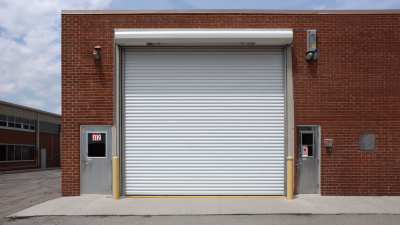
What Is a Commercial Garage Door?
What is a commercial garage door? It is an engineered door system designed for business, industrial, institutional, or public facilities. Unlike a typical residential door, it may open dozens of times daily. It must handle heavier traffic, larger openings, stronger weather exposure, and stricter safety expectations. Common examples include sectional steel doors, rolling doors, high-speed fabric doors, and fire-rated assemblies. Not merely a door.
Its design begins with the building’s work. A loading dock may need a tight seal, impact resistance, and reliable operation during repeated deliveries. A service garage may require clear visibility, ventilation, insulation, and dependable emergency release hardware. The Door and Access Systems Manufacturers Association (DASMA) provides technical data sheets covering door construction, wind loading, safety devices, and maintenance practices. These references help contractors compare performance instead of choosing by appearance alone. That distinction matters.
Energy performance also deserves attention. The U.S. Energy Information Administration’s Commercial Buildings Energy Consumption Survey tracks building energy use, equipment, and operating conditions across the commercial sector. Its findings reinforce a practical point: opening size, usage frequency, air leakage, and climate can influence operating costs. A highly insulated door may still perform poorly if its seals are damaged or its cycles are mismanaged. I would not treat every market forecast as universal, because building types and regional standards vary. Reliable specification requires site measurements, duty-cycle calculations, safety review, and qualified installation. For fire-rated applications, NFPA 80 and the manufacturer’s listing should guide the selection. The right commercial garage doors support safer movement, smoother logistics, and more controlled indoor conditions. They are part of the building envelope, not an afterthought.

What Defines a Commercial Garage Door and How It Differs From Residential Models
What Is a Commercial Garage Door?
A commercial garage door is designed for demanding daily service in workplaces, warehouses, and service facilities. It may open dozens of times each day. Its structure must handle repeated movement, equipment contact, temperature changes, and security needs. Residential doors usually serve private garages with lighter traffic and longer periods between openings. The difference is not only size. Usage matters more.
Commercial models often use reinforced steel, aluminum, or heavy-duty sectional panels. Rolling doors can save ceiling space, while sectional doors may offer better insulation and visibility. Stronger tracks, springs, hinges, and operators support frequent cycles. Safety features may include photo eyes, edge sensors, emergency controls, and controlled closing speeds. A trained installer should check opening dimensions, headroom, wind exposure, electrical access, and expected traffic before recommending a system.
The boundary is not perfectly neat. A busy home workshop might need commercial-grade performance, while a small office may not need the heaviest door. Choosing oversized equipment can increase cost and maintenance without improving daily operation. During an inspection, technicians should also examine rust, loose hardware, uneven movement, and unusual motor noise. These details often reveal problems before the door stops working. Good specifications matter, but accurate site measurements matter just as much.
Which Commercial Garage Door Types Match Industrial, Retail, and Service Applications
A commercial garage door is a heavy-duty entrance designed for frequent operation, larger openings, and demanding working conditions. Its construction usually includes stronger panels, reinforced tracks, durable springs, and safety devices. The right choice depends on traffic, temperature, security, and available wall space.
Industrial facilities often need insulated sectional doors or rolling steel doors. Sectional doors suit loading bays because they lift vertically and seal reasonably well. Rolling steel doors save overhead space and tolerate busy warehouse traffic.
Retail locations may prefer full-view sectional doors. Glass panels improve visibility and bring daylight into showrooms. However, they can require more cleaning and careful impact planning.
Service buildings, such as repair workshops, often benefit from sectional doors with strong insulation and reliable cycle ratings. A small service garage may not need the heaviest door. Oversizing can raise costs without improving daily performance.
Tips:
Measure the opening, headroom, side room, and floor slope before selecting a door. Record daily cycles, vehicle heights, and indoor temperature needs. Ask an experienced installer to check wind exposure and structural support. Maintenance matters, even with durable equipment. Tracks can collect dust, and small alignment issues may become noisy failures. I have seen specifications look perfect on paper, yet poor drainage or limited headroom changed the practical choice. Recheck the site conditions before ordering. Safety sensors, controlled closing, and scheduled inspections should match the building’s actual traffic pattern.
How Door Construction, R-Values, and Cycle Ratings Affect Performance
A commercial garage door serves warehouses, loading bays, fire stations, and service buildings. It must handle frequent movement, changing weather, and daily contact with equipment. Door construction affects this performance. Insulated steel panels usually offer better strength and temperature control than basic single-layer panels. Reinforced tracks and heavy-duty hardware also reduce movement and noise.
R-value measures resistance to heat transfer. A higher R-value can help stabilize indoor temperatures and reduce heating or cooling demands. However, insulation alone does not guarantee efficiency. Gaps around the door, worn seals, and poor installation can waste energy quickly. Cycle ratings show how many opening and closing operations a door is designed to complete. A busy delivery area may need a much higher rating than a small commercial workshop. In real inspections, usage patterns often matter more than a door’s appearance. Specifications help, but they are not the whole story.
Tips: Record daily cycles before choosing a rating. Check panel joints, bottom seals, springs, and tracks during routine service. Listen for scraping or uneven travel. These signs may reveal alignment problems early. A high R-value can still disappoint when installation is careless. That point deserves more attention.
Commercial garage door performance depends on both construction and operating hardware. Insulated steel doors generally provide higher R-values, which can reduce heat transfer, while cycle ratings indicate the approximate number of open-and-close cycles the door assembly is designed to withstand. Actual performance varies with climate, installation quality, maintenance, door size, and hardware selection.
The chart uses representative industry values: R-values are shown as typical midpoint values for common construction categories, and cycle ratings represent commonly specified service levels rather than a guarantee of service life.
What UL 325, NFPA 80, and ASCE 7 Require for Commercial Door Safety
What Is a Commercial Garage Door?
What UL 325, NFPA 80, and ASCE 7 Require for Commercial Door Safety
A commercial garage door serves warehouses, loading docks, parking structures, and service facilities. It handles heavier cycles and greater exposure than a residential door. Safety depends on the complete system, including the door, tracks, springs, operator, controls, and building structure. A technician should evaluate these parts together, not separately.
UL 325 focuses on powered door operators and entrapment protection. Sensors, monitored safety devices, and emergency controls must match the installation. A closing door should stop or reverse when an obstruction interrupts its safety system. Test it at the floor, not only from the control station. Small failures matter.
NFPA 80 addresses fire doors, including installation, inspection, testing, and maintenance. A fire-rated door must close, latch, and remain free from damaging modifications. Required inspections may include checking guides, fusible links, release devices, and clearance conditions. ASCE 7 provides design criteria for loads such as wind pressure. The building location, opening size, and exposure affect the required resistance. A door can operate perfectly yet remain underdesigned for severe wind. That is easy to overlook. Local codes and the authority having jurisdiction may add requirements, so qualified professionals should verify the current edition before approval.
How to Select Commercial Garage Doors by Size, Wind Load, and Operating Speed
A commercial garage door serves warehouses, loading docks, service bays, and other high-use facilities. It may be sectional, rolling, or high-speed. Unlike a residential door, it must match vehicle clearance, traffic volume, security needs, and maintenance routines. A 12-foot opening may suit delivery vans but restrict larger trucks. Measure twice.
Door size should include clear width, clear height, headroom, side room, and backroom. Tracks, springs, operators, and exhaust systems all need space. Wind load is equally important. ASCE 7-22 uses site-specific three-second gust speeds, commonly ranging from 90 to 190 mph across United States regions. DASMA technical guidance recommends selecting doors and anchorage for the building’s calculated design pressure, not for average weather. A coastal opening may need reinforced guides, heavier brackets, and stronger jamb connections. That assumption fails.
Operating speed depends on traffic frequency, safety sensors, temperature, and door weight. Many commercial high-speed systems operate around 8 to 24 inches per second, while conventional sectional doors move more slowly. The correct choice is not always the fastest one. A busy loading dock may benefit from reduced open time, but rapid movement can increase impact damage when sensors or training are neglected. Field inspections should verify cycle ratings, emergency release access, photoelectric protection, and operator compatibility. I would also question optimistic cycle estimates; dust, forklift contact, and poor alignment often reduce real-world performance. Sources: ASCE 7-22 and DASMA commercial-door technical data sheets.