
Why Choose Steel Parking Bollards for Your Property?

A driveway can look secure until a delivery van crosses the painted boundary or a distracted driver mounts the curb. Steel Parking Bollards create a visible, physical barrier around entrances, walkways, loading zones, and other vulnerable edges. Their value is practical. They help guide vehicle movement and can reduce the chance of damage to doors, glazing, landscaping, and people nearby. They are not a complete security plan.

As a transparent editorial example, composite site-planning specialist Alex Morgan might put it this way: “A bollard works best when its placement reflects how people and vehicles actually use the site.” That means looking beyond a product photo. Measure turning space. Check pedestrian routes. Consider sightlines, vehicle types, surface conditions, and how the posts will be maintained. Small details matter. A row placed too close to a doorway can obstruct access; one set too far back may leave the very asset it should protect exposed.

Steel offers durability and a straightforward appearance, but not every steel bollard performs the same way. Construction, dimensions, installation method, and site conditions all affect suitability. A removable post may fit a service entrance, while a fixed option may better suit a boundary that rarely changes. There is no universal answer. That is easy to forget when comparing specifications online. This guide explores the main benefits, design choices, and planning questions property owners should weigh before choosing Steel Parking Bollards for their site.
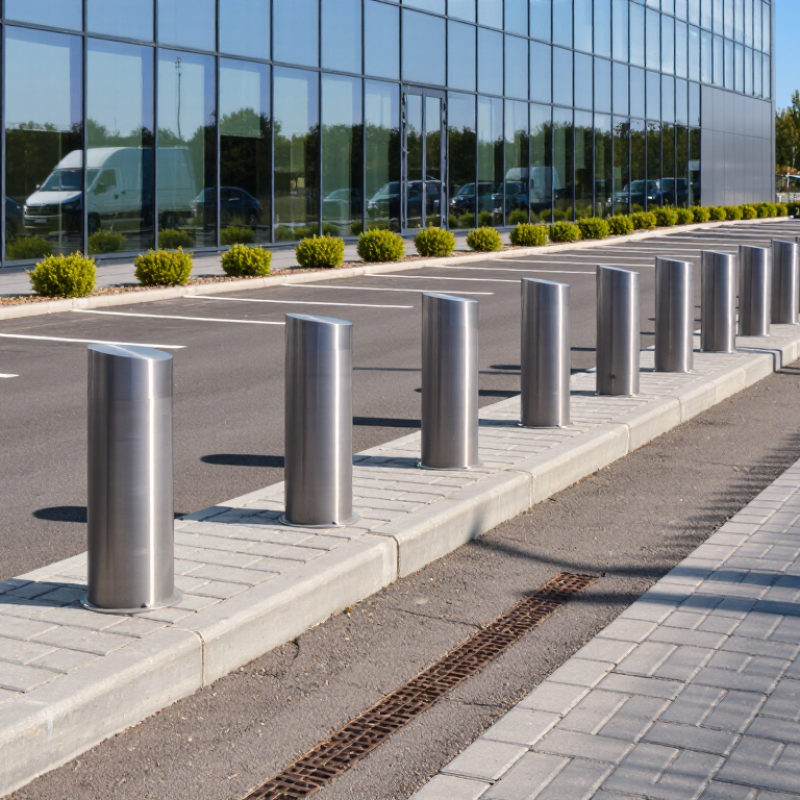
Why Choose Steel Parking Bollards for Your Property?

What Steel Parking Bollards Are and How They Function

Steel parking bollards are sturdy posts installed near parking spaces, entrances, walkways, and building edges. They are commonly made from steel tubing or solid steel, with finishes that help resist weather and everyday wear. Some are fixed into concrete foundations; others fit into ground sleeves and can be removed when access is needed. Their size and installation method affect how they perform.

Their main job is to create a clear physical boundary. A row of bollards can discourage drivers from cutting across a pedestrian area or parking too close to a wall. They also help organize traffic in busy lots. Not every bollard is designed to stop a moving vehicle, though. Impact resistance depends on the post, foundation, spacing, and installation quality. A strong-looking post can still disappoint if its footing is poorly suited to the site. That detail is easy to overlook.

Tips: Check underground utilities before installation. Measure vehicle paths and leave enough room for doors, carts, and accessible routes. Choose a finish that remains visible in rain or low light, and inspect the posts periodically for looseness, corrosion, or damage. Small alignment issues can become annoying fast.

How Steel Construction Affects Strength and Durability

Why Choose Steel Parking Bollards for Your Property?

How Steel Construction Affects Strength and Durability

Steel bollards resist everyday knocks from carts, bicycles, and slowly moving vehicles. Their strength depends on the steel grade, wall thickness, diameter, and anchoring—not just appearance. ASTM A500/A500M specifies a minimum yield strength of 50 ksi for Grade C square or rectangular structural tubing. That figure applies to the specified material, not every bollard or installation. A thicker tube can still fail if its base plate or footing is poorly designed.

Steel’s durability also depends on its finish and surroundings. Rainwater trapped around a base, road salt, and chipped paint can start corrosion. Galvanized or well-maintained coated steel can help slow that process, but no finish makes inspection unnecessary. Look closely at welds, the ground line, and anchor hardware. A small rust patch is not proof of structural failure, yet ignoring it may let damage grow. For vehicle-impact protection, ask a qualified designer to match the bollard and footing to the expected impact; material strength alone does not establish performance.

Tips: Check the coating after installation and seasonal maintenance. Keep soil and debris from hiding the base. If a bollard is bent or loose, restrict nearby access until it has been assessed. A quick visual check helps, but it cannot replace an engineering review.

Where Steel Bollards Help Protect Property

Steel parking bollards are useful where a vehicle could reach a vulnerable part of a property. Common locations include storefront windows, entrance doors, loading bays, utility cabinets, and the ends of pedestrian walkways. At a busy café, for example, a line of steel posts can separate outdoor seating from reversing cars. Spacing matters: posts should block vehicle access without narrowing wheelchair routes or obstructing deliveries.

NHTSA recorded 7,522 pedestrian deaths in U.S. traffic crashes in 2022. That is not a parking-lot count, but it highlights the risks where vehicle and pedestrian paths meet. For impact protection, ASTM F3016 provides a test method for evaluating low-speed vehicle barriers, including penetration performance. Check a bollard’s tested rating, footing requirements, and installation details against the site’s risks. A shallow foundation or unsuitable spacing can undermine protection. Still, a bollard can be misplaced. A site review should consider turning paths, drainage, underground services, and the exact assets needing protection.

Why Choose Steel Parking Bollards for Your Property?

Steel bollards can help protect storefronts, entrances, pedestrian areas, and parking edges from vehicle access. When placing them along an accessible route, preserve the required clear passage width.

Accessible passage widths: The 2010 ADA Standards generally require a 36-inch minimum clear width for an accessible route. A short restriction may be as narrow as 32 inches when it is no more than 24 inches long, subject to the standard’s conditions. These are clearance requirements, not bollard dimensions; check applicable codes and site conditions before installation.

What to Consider When Choosing and Installing Bollards

Choosing steel parking bollards starts with the job they need to do. Are they guiding traffic, protecting a doorway, or marking a pedestrian route? A row that looks neat on a plan may leave a wide gap beside a curb. Measure vehicle paths and turning space on site, not just on a drawing. Check bollard height, diameter, and impact rating against the level of protection required. Small details matter.

Steel suits many outdoor settings, but exposure affects upkeep. In damp or coastal areas, ask about corrosion-resistant materials and protective finishes. Choose a finish that remains visible in rain, shade, and low light. Reflective bands can help drivers spot posts at night, though they cannot replace good lighting. A black bollard may look tidy, yet disappear against a dark wall.

Installation needs the same care as selection. Before drilling, locate buried utilities and check for drainage lines or heated paving. Surface-mounted posts can be practical on existing concrete, but the slab must be suitable for the anchoring system. Embedded bollards need adequate depth and a properly prepared footing; follow the supplier’s installation specifications. Keep posts clear of accessible routes, doors, and snow-clearing paths. A rushed layout can create new obstacles.

Why Choose Steel Parking Bollards for Your Property? — What to Consider When Choosing and Installing Bollards

Use this guide to compare common options. Dimensions and installation requirements are indicative; confirm suitability with the bollard manufacturer, a qualified installer, and applicable local codes.

Decision factor What to consider Practical guidance
Purpose and protection level Define whether bollards are intended to guide traffic, deter casual vehicle access, protect pedestrians, or provide tested impact resistance. A standard steel bollard is not automatically crash-rated. Where vehicle-impact resistance is required, select a system with independently verified performance appropriate to the site and follow its tested installation details.
Steel type and corrosion protection Consider exposure to rain, road salt, coastal air, chemicals, and abrasion, as well as the appearance required. Common choices include galvanized carbon steel, painted or powder-coated steel, and stainless steel. A coating can help protect steel, but damaged areas and cut edges may need maintenance; match the finish to local exposure conditions.
Fixed, removable, or retractable Decide whether vehicle access must remain permanently blocked or be opened for deliveries, emergency access, or authorized vehicles. Fixed bollards suit permanent separation. Removable or retractable models provide controlled access but add operating hardware and maintenance needs. Keep access routes and emergency provisions consistent with local requirements.
Diameter and height Select dimensions based on visibility, site layout, vehicle types, intended deterrence, and the product’s structural design. Many general-purpose products are offered in diameters of roughly 4–6 inches (about 100–150 mm), with above-ground heights commonly around 30–42 inches (about 760–1,070 mm). These are common product ranges, not universal design requirements.
Spacing and layout Plan spacing to deter vehicle entry while preserving pedestrian passage, wheelchair access, door operation, and service access. There is no single spacing suitable for every site. Measure the largest vehicle or access opening that must be controlled, check applicable accessibility rules, and have the layout reviewed before drilling or excavation.
In-ground installation A buried sleeve or embedded post transfers loads into the surrounding foundation; required depth and footing size depend on the product and ground conditions. Follow the manufacturer’s foundation details and confirm soil, drainage, frost, and pavement conditions. Do not assume a generic embedment depth is adequate, especially where impact resistance is needed.
Surface-mounted installation Base-plated bollards can be installed on suitable existing concrete, but their performance depends on the slab, anchors, edge distances, and installation quality. Verify slab thickness and condition and use the specified anchors and layout. Surface-mounted models may be unsuitable where the concrete or substrate cannot support the intended loads.
Visibility and finish Bollards should be easy to see in daylight and at night, including in rain or low-light conditions. Consider contrasting colors, reflective bands, or other visible markings where appropriate. Keep markings clean and replace damaged reflective material; check local requirements for public paths and vehicle areas.
Utilities and site checks Excavation can damage buried services such as electrical, gas, water, drainage, or communications lines. Before digging, arrange utility locating through the relevant local service and follow safe excavation procedures. Check for underground structures, drainage, and property boundaries as well.
Maintenance and lifecycle Inspect the bollard, coating, anchors, and surrounding pavement for damage, loosening, corrosion, or trip hazards. Set an inspection schedule suited to traffic and exposure. Repair coating damage promptly, keep removable mechanisms clear and operating correctly, and replace components that no longer meet the site’s safety needs.

How to Maintain Steel Parking Bollards Over Time

Why Choose Steel Parking Bollards for Your Property?

How to Maintain Steel Parking Bollards Over Time

Steel bollards need regular attention, even when their finish looks sound. Check them every few months, and after vehicle contact or severe weather. Look for movement at the base, loose anchors, chipped paint, and rust around welds or drainage openings. Small checks matter.

Use a soft brush, water, and mild detergent to remove dirt and road salt. Rinse well, then let the surface dry. Salt can hold moisture against steel, so pay extra attention near treated roads and parking areas. Rust starts quietly. If you find a small damaged patch, clean it carefully and apply a compatible coating according to its instructions. Avoid covering active corrosion with fresh paint; the problem may continue underneath. Coating systems vary, so confirm what is suitable for the bollard’s finish before making repairs.

Check anchor hardware for looseness, but do not guess at tightening requirements. Follow the installation guidance, since over-tightening can damage components or the surrounding surface. Keep water from pooling around the base, and clear leaves or debris from nearby drains. A frequent oversight is treating every mark as cosmetic. A leaning post, expanding rust, or cracked concrete calls for a closer assessment by a qualified professional. Maintenance is not complicated, but skipped inspections can make small defects harder to address.

Go to Top