How to Choose an Aluminum Composite Panel Manufacturer?

Choosing an Aluminum Composite Panel Manufacturer is not simply a price comparison. It is a decision about façade safety, color stability, fabrication quality, and long-term support. A panel may look flawless under showroom lighting, yet fail expectations after harsh sunlight, heavy rain, or repeated temperature changes. The manufacturer’s process matters more than polished photographs.

Dr. Joseph Lstiburek, a respected building-envelope expert, has said, “Water is a building’s worst enemy.” That warning applies directly to cladding selection. A dependable Aluminum Composite Panel Manufacturer should explain how its panels manage moisture, joints, sealants, and drainage. Ask for current technical data, fire-performance documentation, coating specifications, core details, and warranty conditions. Request physical samples. Check the surface under angled light. Look for ripples, uneven gloss, exposed edges, or inconsistent color.

Experience also deserves proof. Visit the factory if possible. Observe coil storage, lamination controls, cutting accuracy, and quality inspections. Speak with project references, not only sales representatives. A reliable supplier can discuss failures honestly and explain corrective actions. That is a strong trust signal.

Price still matters.

But the cheapest quotation may conceal costly rework, delayed delivery, or weak technical guidance. I have seen buyers focus on thickness while overlooking core composition and installation support. That approach is understandable, but incomplete. Manufacturer selection should connect product evidence with project conditions, design requirements, and installer capability. No checklist replaces judgment. Yet a careful checklist reduces avoidable surprises.

How to Choose an Aluminum Composite Panel Manufacturer?

What Is an Aluminum Composite Panel Manufacturer?

An aluminum composite panel manufacturer is a company that produces bonded panels for building exteriors, signs, interiors, and industrial applications. It combines aluminum sheets with a mineral, fire-retardant, or polymer core. The production process usually includes coil coating, core preparation, lamination, trimming, and quality inspection. Each stage affects flatness, color consistency, bending performance, and weather resistance.

A reliable manufacturer should explain its materials clearly, not hide them behind vague terms. Ask for technical data, fire-test reports, coating specifications, and documented quality procedures. Experienced teams can recommend suitable thickness, core type, surface finish, and panel size for your project. Request a physical sample. Touch the coating, inspect the edges, and compare color under natural light. Small details matter.

Factory experience also matters. A capable producer checks bonding strength, dimensional tolerance, coating adhesion, and batch consistency. Some manufacturers can provide installation guidance and production records. That support reduces mistakes during fabrication. However, no factory is perfect. Delays, shade variation, or communication gaps can still occur. I would test a small order before approving a large one. This step may feel slow. It often exposes weak packaging, unclear labeling, or uneven quality before these problems reach the job site. A trustworthy manufacturer welcomes reasonable questions and responds with specific evidence, not polished promises.

How to Choose an Aluminum Composite Panel Manufacturer?

What Is an Aluminum Composite Panel Manufacturer?

Selection Dimension Recommended Data or Benchmark Why It Matters What to Verify
Product Definition An aluminum composite panel is a flat sandwich panel made from two aluminum sheets bonded to a lightweight core. The combination of aluminum skins and a core provides low weight, rigidity, and a smooth architectural finish. Confirm the panel construction, core composition, bonding method, and intended application.
Panel Thickness Common architectural thicknesses include 3 mm, 4 mm, and 6 mm. Thickness affects rigidity, weight, fabrication behavior, and suitability for exterior or interior use. Compare the stated thickness with the applicable product standard and measured production tolerances.
Aluminum Skin Thickness Typical architectural panels use aluminum skins around 0.3 mm to 0.5 mm thick, depending on the design. Thicker skins generally improve dent resistance, flatness, routing performance, and weathering durability. Request skin-thickness records, alloy information, and independent dimensional inspection where required.
Core Type Available core categories commonly include polyethylene, mineral-filled fire-retardant, and non-combustible mineral cores. Core composition strongly influences fire performance, weight, cost, stiffness, and code compliance. Obtain the exact core formulation and do not rely only on terms such as “fire resistant” or “fire rated.”
Fire Performance Fire classification and test requirements vary by building code and market. Relevant evaluations may include EN 13501-1, ASTM E84, or NFPA 285 where applicable. Exterior wall systems may require testing of the complete assembly rather than the panel alone. Check current, traceable test reports issued for the specified panel construction and installation system.
Coating System Common finishes include PVDF or FEVE coatings for demanding exterior applications and polyester coatings for many interior or general-purpose uses. The coating affects color retention, gloss, chemical resistance, scratch resistance, and outdoor durability. Verify coating type, nominal dry-film thickness, surface preparation, warranty terms, and color-control process.
Dimensional Options Many manufacturers offer standard widths near 1,220 mm, 1,250 mm, or 1,500 mm, with customized lengths subject to production limits. Panel dimensions influence material waste, joint layout, transportation, and installation efficiency. Confirm maximum panel size, cutting tolerances, flatness, squareness, and packaging dimensions.
Mechanical Properties Important data includes tensile strength, peel strength, flexural rigidity, impact resistance, and thermal expansion. These properties help determine whether the panel can withstand handling, wind loads, bending, and temperature changes. Request technical data based on recognized test methods and confirm compatibility with the project’s structural design.
Quality Management A documented quality management system, such as ISO 9001 certification, can support consistent manufacturing controls. Controlled inspection and traceability reduce variation between production batches. Check certificate validity, inspection plans, batch records, calibration records, and corrective-action procedures.
Weathering and Corrosion Resistance Exterior panels should be evaluated for accelerated weathering, humidity, adhesion, impact, and corrosion resistance according to the project requirements. Coastal, industrial, high-UV, and high-humidity environments place different demands on the coating and aluminum substrate. Match test evidence and coating selection to the actual climate, exposure level, cleaning method, and expected service life.
Fabrication Capability Suitable panels should support required operations such as cutting, routing, folding, drilling, riveting, and cassette fabrication. Correct fabrication behavior helps prevent cracking, delamination, edge damage, and visible surface defects. Request fabrication guidelines, sample processing, minimum bend radius, and installation details.
Color and Appearance Control Color consistency should be controlled by documented color references and batch comparison procedures. Differences in gloss, texture, or color can become noticeable when panels from different batches are installed together. Approve a physical sample, define acceptable variation, and identify batch numbers before production.
Sustainability Information Useful documentation may include recycled-content data, Environmental Product Declarations, material declarations, and recycling instructions. Transparent environmental data supports green-building documentation and responsible material selection. Verify whether environmental claims are independently assessed and applicable to the exact product configuration.
Commercial and Delivery Reliability Evaluate minimum order quantity, sample lead time, production lead time, packaging, shipping terms, replacement policy, and technical support. Reliable supply and clear support reduce installation delays and help maintain consistent quality across the project. Use a written specification, approved sample, inspection procedure, delivery schedule, and acceptance criteria.
Practical selection rule: Select the manufacturer that can provide verifiable technical documents, consistent batch quality, suitable fire performance, appropriate coating durability, and reliable delivery for the specific project conditions.

Which Technical Standards and Materials Should Be Evaluated?

Choosing an aluminum composite panel manufacturer requires more than comparing prices.

Start with the panel’s tested construction, not its brochure. Ask for the exact aluminum alloy, skin thickness, core composition, coating system, and production tolerance. EN 1396 helps assess coated aluminum sheet, while EN 13501-1 classifies reaction to fire. ASTM E84 may also appear in North American specifications, but its results cannot replace project-specific fire testing.

The core deserves careful attention. Polyethylene cores may suit limited applications, while mineral-filled or non-combustible cores generally provide stronger fire performance. Request full test reports, including sample thickness and mounting method. The report must match the proposed panel. Otherwise, it proves very little.

NFPA’s Fire Loss in the United States report recorded about 1.39 million fires in 2023, showing why fire classification should never be treated as paperwork.

For durability, review coating performance under ISO 4892 weathering methods and verify adhesion through recognized peel-strength testing, such as ASTM D1781 where applicable.

Ask whether the coating is PVDF, FEVE, or another system, then check its specified resin content and warranty conditions. AAMA 2605 is often relevant for high-performance architectural coatings. Examine factory records for color variation, flatness, and batch traceability. I would also inspect a retained production sample. Laboratory data can be excellent, yet installation damage, poor sealing, or incorrect fixing may still cause failure. Manufacturers should explain these risks plainly, not hide behind certificates.

How to Compare Manufacturing Capabilities and Product Quality?

How to Choose an Aluminum Composite Panel Manufacturer?

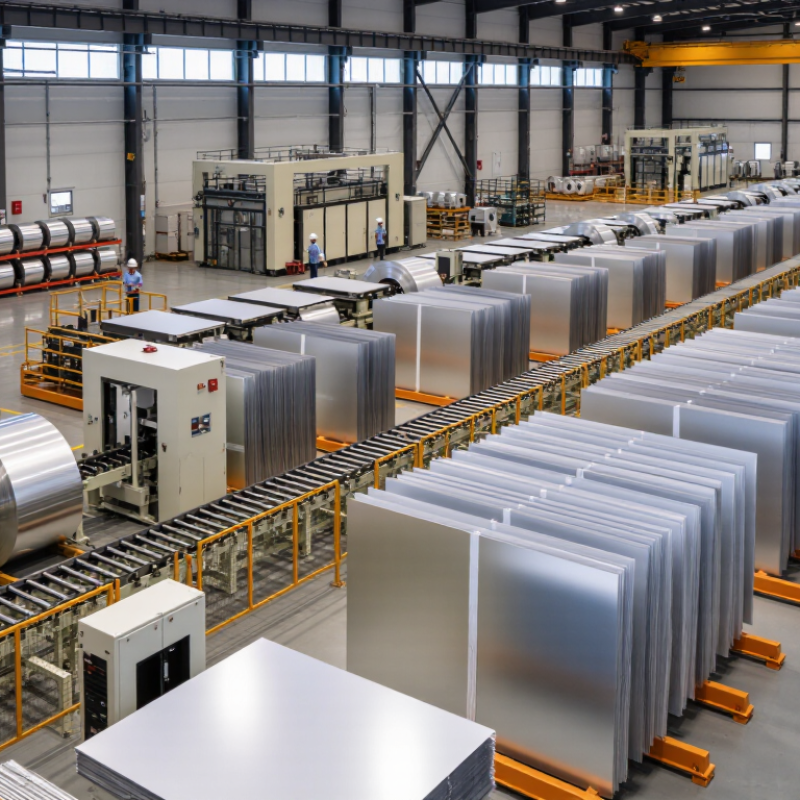
Comparing manufacturers starts with their actual production capabilities, not attractive brochures. Ask whether the factory controls aluminum coil forming, core bonding, coating, cutting, and final inspection. A reliable supplier should explain its equipment clearly. Look for extrusion or roll-forming lines, controlled lamination temperatures, and clean production areas.

Walk through the process if possible. Dust near the adhesive line can affect bonding. Small details matter.

Request recent samples from different production batches. Check panel thickness, surface flatness, color consistency, edge quality, and protective film adhesion. Bend a sample carefully and inspect the cut edge. The core should bond evenly without visible gaps.

Ask for test records covering peel strength, fire performance, coating durability, and dimensional tolerance. Reports should identify the tested product and date. Generic certificates are not enough.

Do not judge quality from one perfect sample.

That can mislead you. Compare batch records, inspection frequency, and defect handling procedures.

A capable manufacturer should trace each order to raw materials, operators, and testing results. However, even experienced factories may miss occasional surface marks or slight color variation.

Ask how they respond when this happens. Their answer often reveals more than their sales presentation. Price still matters, but unstable quality can create greater costs during installation, replacement, and project delays.

What Should Buyers Check in Certifications, Services, and Lead Times?

How to Choose an Aluminum Composite Panel Manufacturer?

A reliable aluminum composite panel manufacturer should provide clear, verifiable certifications. Check quality systems, fire-performance reports, coating specifications, and environmental documents. Confirm that each certificate matches the actual panel structure, thickness, core, and production site. A certificate alone does not guarantee consistent quality. That assumption is risky. Ask for recent test reports, sample panels, and batch traceability records. Experienced suppliers should explain technical terms without avoiding difficult questions.

Service quality matters during design and installation. Request color samples, technical drawings, cutting guidance, and written responses to project changes. A capable technical team can identify problems before panels reach the site. Confirm whether the manufacturer supports installation training and after-sales inspection. Small details matter, such as protective film direction and corner treatment. These details are easy to overlook, even for experienced buyers.

Lead times should be documented, not promised casually. Ask about sample timing, production capacity, inspection dates, packaging, and shipping arrangements. Request a delivery schedule with realistic buffer time. The fastest quote may not be the safest choice. Delays often begin with unclear approvals or late color confirmation. I would also ask how the supplier handles damaged panels or production errors. Their answer reveals more than a polished sales presentation.

Tips: Compare at least three suppliers. Verify certificates independently. Approve samples in writing. Keep every technical change documented. Allow extra time for inspections and transport.

How Can You Select the Best Manufacturer for Your Project?

Choosing the best aluminum composite panel manufacturer requires more than comparing catalog prices. I would inspect a real production line, not only polished photographs. Ask for coil certificates, core composition, coating thickness, and batch traceability. A reliable supplier should provide recent test reports for fire performance, adhesion, impact resistance, and weathering. Check whether reports match the exact panel configuration you will purchase.

Fire safety deserves careful attention. Request classification under the applicable standard, such as EN 13501-1 or ASTM E84. Do not accept a generic “fire-resistant” statement. For high-rise projects, ask whether the complete wall assembly has been tested, not just the panel. The 2023 International Energy Agency report estimates that aluminium production creates about 1.1 billion tonnes of annual CO2 emissions. Therefore, evaluate recycled content, energy sources, and verified environmental declarations. Green claims without evidence are weak.

Production capacity also affects project risk. Review sample dimensions, color consistency, flatness, and protective-film removal on site. A factory should explain its quality-control frequency and corrective process. Ask for references from projects exposed to similar humidity, wind, or temperature changes. The 2024 UNEP Global Status Report states that buildings and construction contribute about 34% of global energy demand. That makes thermal detailing and responsible material selection important. I would still avoid choosing solely on sustainability scores. Delivery records, technical support, and honest answers matter more than impressive brochures. One overlooked detail can become an expensive facade problem.

A balanced manufacturer evaluation should prioritize panel performance and quality control while also considering compliance, delivery reliability, technical support, and total cost. The percentages represent a practical project-scoring framework and can be adjusted to match the building type, climate, fire-safety requirements, and installation conditions.

Go to Top