How Does Reverse Circulation Drilling Work?
Reverse Circulation Drilling is a method used to collect rock samples while drilling a borehole. It is common in mineral exploration, where crews need a steady flow of material for geological assessment. The drill string uses dual-wall rods: compressed air travels down the outer passage, while rock cuttings return through the inner tube. This reversed flow helps limit contact between the sample and the borehole wall. At the surface, a cyclone and splitter direct the cuttings into labeled sample bags. The process can be fast. A geologist can examine the fragments for changes in rock type, mineralization, and alteration.
The results depend on more than the rig. Rod connections, air pressure, sample handling, and careful labeling all affect sample quality. A damp interval, for example, may slow the return of cuttings or make them harder to split consistently. Crews monitor the equipment and record drilling conditions so later interpretations have useful context. Dust control and safe work practices also matter around compressors and moving machinery. Reverse circulation can provide practical, relatively rapid samples, but it does not reveal intact rock structure as clearly as core drilling. No method is flawless. Choosing the right technique means weighing the exploration goal, geology, depth, and available site conditions. Even a neat sample bag can hide uncertainty; careful interpretation remains essential.
Core Components of a Reverse Circulation Drilling System
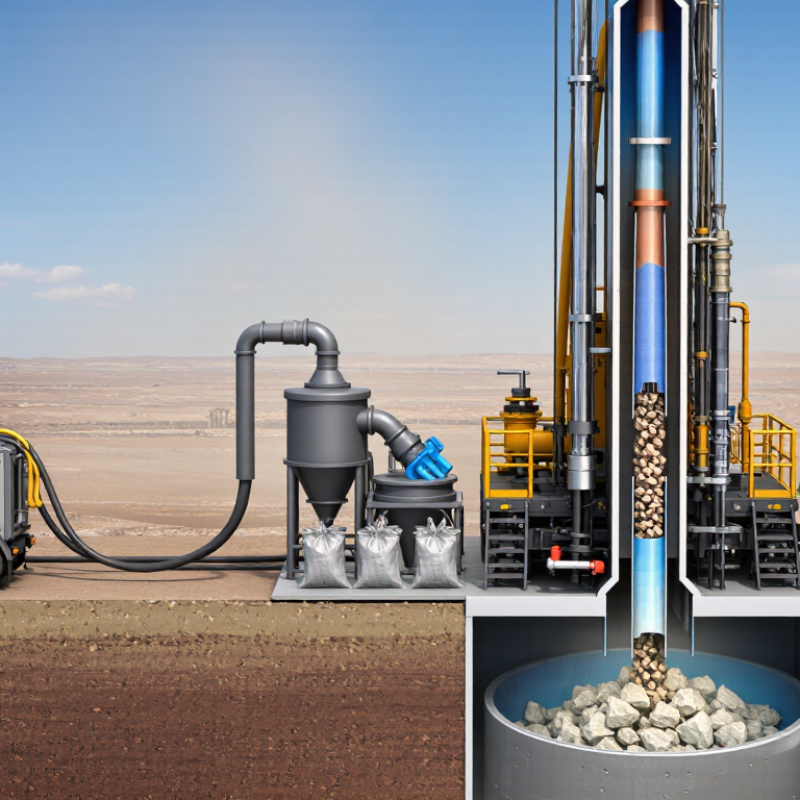
A reverse circulation drilling system depends on a sealed path for rock chips. Compressed air travels down the outer annulus of dual-wall drill rods, drives a hammer at the bit, and lifts fragments through the inner tube. The cyclone slows the returning air, dropping cuttings into a collection bag or bin. Small leaks matter: they can let surface material enter the sample stream and blur the geology.
The key components work as a chain. The compressor supplies air; the rods keep downward and upward flow separate; the hammer and bit break rock; and the cyclone separates chips from air. A splitter then divides the sample for logging and laboratory analysis. The Geological Survey of Western Australia’s 2019 field guidance describes one-metre sampling intervals as a common exploration practice. That is a useful reference, not a guarantee of representative samples. Moisture, worn seals, or poor splitter setup can change what reaches the bag.
Check the details. Operators should inspect rod joints, hoses, cyclone wear, and splitter cleanliness during drilling. The 2012 JORC Code calls for reporting drilling methods, sample recovery, and sampling intervals, supporting transparent interpretation of results. A tidy sample pile can still mislead. Recording recovery and noting wet or contaminated intervals helps reviewers judge the data, rather than trusting appearance alone.
How the Drill Bit Breaks Through Rock
How Does Reverse Circulation Drilling Work? How the Drill Bit Breaks Through Rock
In reverse circulation drilling, compressed air travels down the outer passage of the drill rods and powers a hammer near the bit. The hammer’s piston strikes the bit repeatedly. Tungsten-carbide buttons concentrate those impacts into small areas, cracking the rock into chips. The drill string rotates between impacts, helping the buttons reach fresh surfaces instead of pounding one spot. Air then carries the chips up through the inner tube for collection. The sound is sharp and rhythmic. But the rock response is not always predictable.
The bit does not break every rock in the same way. The International Society for Rock Mechanics’ 1981 strength classification places weak intact rock at 5–25 MPa in uniaxial compressive strength, while extremely strong rock exceeds 250 MPa. Those figures help explain why one bit and operating setting may perform very differently across a single bore. In hard, abrasive formations, button wear can blunt the cutting edges; in fractured ground, air loss may reduce the reliable return of chips. A clean sample stream matters, yet it does not guarantee every fragment represents the interval perfectly.
Tips: Watch the return airflow and sample stream together. A sudden change in chip size, dust, or flow deserves a check. Adjusting too quickly can hide the real cause.
How Does Reverse Circulation Drilling Work? — How the Drill Bit Breaks Through Rock
| Stage | What Happens | How the Bit Breaks Rock | Air and Sample Path |
| 1. Air enters the drill string | Compressed air is directed down the annular space between the inner and outer tubes of the dual-wall drill rods. | The air supplies the down-the-hole hammer in common hammer-based reverse circulation setups. | Air travels down the outer passage toward the hammer and drill bit. |
| 2. The hammer drives the bit | A piston inside the down-the-hole hammer repeatedly strikes the bit as the drill string rotates. | Carbide buttons on the bit concentrate the impact force on the rock, causing it to fracture and break into small chips. | The bit works at the bottom of the hole; the hammer’s repeated impacts and rotation advance the borehole. |
| 3. The bit cuts and chips rock | Rotation moves the button bit across the bottom of the hole while impact continues. | Button bits typically crush and chip hard rock. The exact bit design depends on the rock conditions and drilling method. | Broken rock fragments are picked up by the circulating air near the bit. |
| 4. Cuttings enter the inner tube | Air carries the rock fragments into the opening at the bit and up through the inner tube of the drill rods. | The bit continues breaking fresh rock as the hole deepens. | Returning cuttings travel inside the inner tube, separate from the downward airflow in the outer passage. |
| 5. Samples reach the surface | The cuttings discharge at the surface through a sample hose and are directed to a collection system. | Each sample consists of rock fragments produced as the bit advances through the formation. | The inner-tube return path helps keep samples separate from material along the outside of the drill string. |
Note: Reverse circulation describes the flow path used to return cuttings through the inner tube. Hammer-and-button-bit action is common in hard-rock RC drilling, but bit and drilling setups vary with the formation and application.
How Compressed Air Carries Cuttings to the Surface
How Does Reverse Circulation Drilling Work?
How Compressed Air Carries Cuttings to the Surface
Reverse circulation drilling uses dual-wall drill rods to keep the sample return separate from the air supply. Compressed air travels down the space between the inner and outer tubes. At the bit, it loosens rock fragments and directs them into the inner tube. The fragments then rise through the center of the drill string to the surface. That is the key. Air speed and pressure must be sufficient to lift the cuttings, but actual settings depend on depth, hole size, and ground conditions.
At the surface, the returning air and rock fragments enter a cyclone. The cyclone slows the flow, allowing cuttings to drop into a collection container for sampling. It sounds simple, but it is not foolproof. Water, poor sealing, or a partial blockage can disrupt the return and affect sample quality. Even a steady stream can hide problems: fine particles may travel differently from larger fragments, and samples can mix if collection is poorly managed. A clean-looking return is useful evidence, not proof that every interval is represented perfectly. Regularly checking airflow, connections, and sample handling helps crews spot trouble early.
How Does Reverse Circulation Drilling Work?
How compressed air carries cuttings to the surface
Compressed air travels down the space between the drill rod’s inner and outer tubes. At the bit, it helps lift rock cuttings into the inner tube, carrying them back to the surface for collection. Compressor requirements vary by rig, depth, and ground conditions; the range shown is a typical reference, not a universal specification.
How Drill Cuttings Are Collected and Logged
In reverse circulation drilling, compressed air moves down the space between the drill rods and returns through an inner tube, carrying rock chips to the surface. The chips pass through a cyclone, which slows the airflow and drops the material into a collection tray. A splitter then divides each sample into portions for logging, storage, or laboratory testing. Keep the collection area orderly. Dust and spilled chips can blur sample boundaries.
Drill crews usually collect samples at regular depth intervals, often every metre, though project procedures may differ. The geologist records the depth range, recovery, rock type, colour, grain size, alteration, and visible mineral content. A hand lens helps distinguish fine chips from larger fragments. Moisture and drilling conditions matter too: wet material or poor air return may affect sample quality. Small details matter.
A representative portion goes into a labelled bag, with its interval and sample number checked against the log. Equipment should be cleared between intervals to reduce contamination from leftover chips. Notes should describe what is visible, not what the logger hopes to find. RC cuttings are fragments, not intact core, so contacts and structures can be difficult to interpret. It is easy to overread a bright mineral grain; recording uncertainty is more useful than making a confident guess.
How Drilling Data Guides Exploration Decisions
How Does Reverse Circulation Drilling Work?
How Drilling Data Guides Exploration Decisions
Reverse circulation (RC) drilling uses compressed air to drive a hammer and lift rock chips through an inner tube. At the rig, crews collect the chips in measured intervals, often one metre, and record changes in colour, grain size, and rock type. Each sample is labelled and sent for laboratory assays. The results place metal grades beside depth and geology, helping geologists identify promising zones and plan follow-up holes. Small details matter: a sudden change in chips may mark a contact, while inconsistent sample recovery can weaken confidence in an assay.
Decisions rely on more than high grades. Geologists compare assay results with drill depth, lithology, recovery, and quality-control samples, then check whether nearby holes show the same pattern. A continuous mineralised interval may justify closer-spaced drilling; scattered results may call for a different target or no further drilling. S&P Global Market Intelligence’s World Exploration Trends 2024 report estimated global nonferrous exploration budgets at US$12.5 billion in 2023, 3% below 2022. Under tighter budgets, disciplined data interpretation matters. Still, a neat spreadsheet can mislead. RC chips provide less structural detail than intact core, and contamination or poor recovery can distort the picture. Exploration decisions should reflect those limits, not just the most attractive assay.