A garage door can shape the way a home looks and feels from the street. Glass garage doors replace much of the usual solid surface with glazed panels, held in frames made from materials such as aluminum or steel. They are common in modern homes, workshops, and spaces where daylight matters. Picture a clean, bright garage on a cloudy afternoon. That is part of the appeal.
But appearance is only one part of the decision. Glass can bring natural light indoors and create a more open look, yet it may offer less privacy than an opaque door. Glazing options, frame quality, insulation, and the local climate all affect comfort and performance. Some doors use insulated glass; others prioritize a slim profile. The details matter.
This guide explains how glass garage doors work, what styles and materials are available, and which features deserve a closer look. It also considers cost, maintenance, energy efficiency, privacy, and safety. There is no single best choice. A sunny garage may benefit from clear panels, while a street-facing room may need frosted or tinted glass. I would not judge a door by its showroom appearance alone. Check the product specifications, warranty, and installation requirements, and ask a qualified installer how the door will perform in your home. Glass can be striking. It can also be the wrong fit.
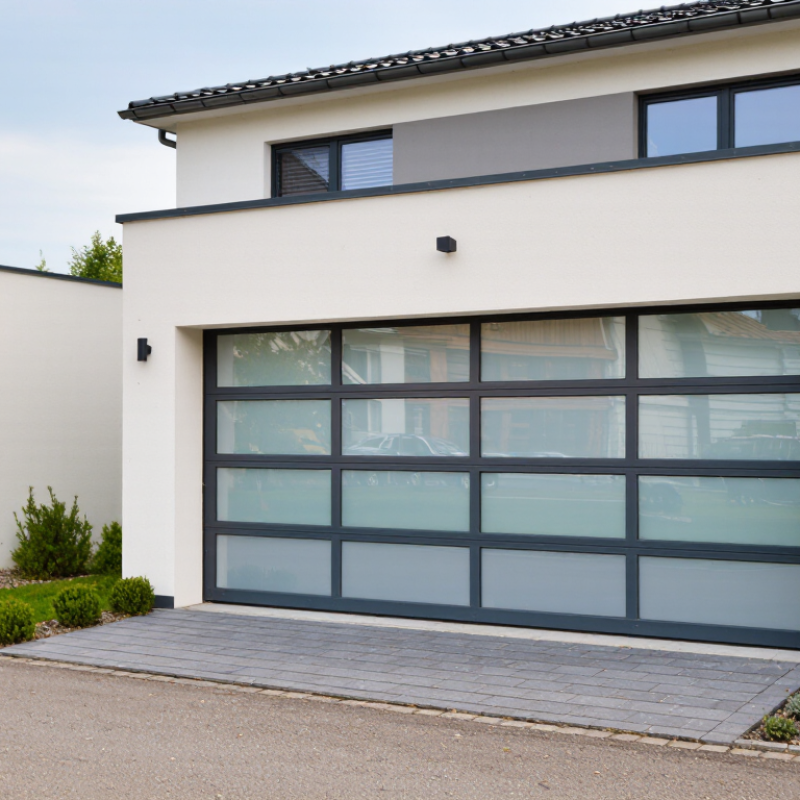
Glass garage doors are built from framed sections rather than one unbroken sheet. Most use aluminum rails and stiles to hold individual glass panels. The sections connect with hinges and move along tracks on rollers, much like a conventional sectional door. Torsion or extension springs counterbalance the door’s weight. Glass can be clear, frosted, tinted, or patterned, depending on how much light and privacy a garage needs.
Not all glass is alike. Tempered panels are heat-treated for greater impact resistance; some designs use laminated or insulated glass instead. The right choice depends on the climate, the garage’s exposure, and how the space is used. Small gaps matter. Weather seals fit along the bottom and sides, while reinforced tracks and properly sized springs help the door move smoothly. Installation should account for the door’s actual weight, not just its appearance. A heavy glass door can strain mismatched hardware. One detail is easy to underestimate: fingerprints and dust show quickly, especially in strong afternoon light. I’d check how the glass looks from inside as well as outside, since reflections can change noticeably with the time of day.
Glass garage doors pair transparent or translucent panels with a supporting frame. Clear tempered glass brings daylight into a garage, but it also reveals stored items. Frosted, tinted, or patterned glass softens views while still admitting light. Privacy matters.
Tempered glass is heat-treated to improve impact resistance and breaks into smaller pieces if it fails. Laminated glass holds fragments between bonded layers, which can help keep a damaged panel in place. Insulated glass uses two panes and a sealed space to reduce heat transfer. It may improve comfort, but the full door’s performance also depends on its seals and frame. Ask for the glass specification, not just a general claim about insulation.
Aluminum frames are lightweight and resist rust, though thin sections can feel less rigid. Steel frames are sturdier but need sound coatings to limit corrosion. Wood offers a warmer appearance, with more upkeep as moisture and temperature change. Most glass doors use sectional overhead panels that travel on tracks; full-view designs maximize daylight, while narrower glazed sections retain more privacy. Check headroom, track clearance, and panel weight against the opening and opener capacity. Looks can be convincing; the fit is less forgiving than it seems.
Glass garage doors use glazed panels held in a metal frame, usually aluminum. Most residential models move like sectional doors: rollers guide the panels along overhead tracks, while counterbalance springs offset their weight. An electric opener pulls the door upward; manual operation is possible, too. The glass may be tempered or laminated, and insulated versions use double glazing or framed panels. Details matter. Heavy glazing needs a door system designed for its weight, not simply a standard door with glass swapped in.
These doors suit modern homes, studios, restaurants, workshops, and showrooms where daylight or a visible interior is useful. Clear glass brightens a dim garage, but it can expose tools and stored items. Frosted or tinted glazing trades some view for privacy. Still, glass is not magic. The U.S. Department of Energy’s Energy Saver guidance estimates that windows account for 25–30% of residential heating and cooling energy use. That figure concerns windows, not garage-door assemblies, so it should not be treated as a glass-door performance estimate.
For a real comparison, check the complete door’s insulation and air-sealing details. The National Fenestration Rating Council’s rating system uses U-factor and solar heat gain coefficient (SHGC) to describe heat transfer and solar gain in rated fenestration products. Ask whether the garage is conditioned, how much afternoon sun reaches it, and whether the door faces a street. A bright workspace can be appealing. In a hot, exposed garage, though, extra glass may mean more heat and glare unless the glazing and shading are chosen carefully.
Glass garage doors use glazed panels set within a supporting frame, often aluminum or steel. Clear, frosted, tinted, and textured glass options change both the appearance and privacy level. During the day, natural light can brighten a workshop or garage without switching on overhead lights. That can feel bright. The panels also let you see outside before opening the door, which is useful when checking a driveway. Still, clear glass may reveal stored bikes, tools, or boxes to passersby.
The trade-offs matter in daily use. Glass can show fingerprints, dust, and water spots, so expect regular cleaning, especially near busy roads. Large panes may also add weight; the door hardware and opener should be selected for the finished door’s specifications. Insulation varies by glass type and construction, and even insulated glass may not match a well-insulated solid door. Not always. Ask about the stated thermal performance rather than judging by appearance. Glare and heat gain can also affect a sun-facing garage. Frosted or tinted panels help with privacy, but reduce light or visibility. The privacy trade-off is easy to underestimate. Before choosing, consider what you store, how often you clean, and whether the garage is attached to heated living space.
| Factor | Key benefit | Practical drawback | What to check before choosing |
|---|---|---|---|
| Design and appearance | Creates a contemporary look and can complement modern or industrial-style homes. | The prominent glass-and-frame appearance may not suit every home or neighborhood. | Compare frame colors, finishes, panel proportions, and how the design fits the exterior. |
| Natural light | Translucent or clear panels can bring daylight into the garage, reducing the need for daytime electric lighting. | Direct sunlight may increase glare and heat, depending on the glass, orientation, and climate. | Ask about tinted, frosted, or textured glazing and consider the door’s sun exposure. |
| Privacy | Frosted, obscured, or tinted glass can admit light while limiting clear views into the garage. | Clear glass can expose vehicles and stored belongings; tint alone may provide less privacy at night when the interior is lit. | View sample glass from both sides in daylight and after dark. |
| Thermal performance | Insulated glazing and well-sealed frames can improve comfort compared with basic single-pane configurations. | Glass doors are not automatically energy-efficient; heat transfer and air leakage can be concerns, especially in attached garages. | Check the complete door’s insulation information, glazing construction, seals, and suitability for the local climate. |
| Safety and glass type | Safety glazing options are designed to reduce injury risk if a panel breaks. | Glass can still break, and a damaged panel may need professional replacement. | Confirm the specified safety-glazing type and that the door meets applicable local building requirements. |
| Cleaning and upkeep | Smooth glass surfaces are straightforward to clean with suitable glass-cleaning methods. | Dust, fingerprints, water marks, and exterior grime can be more noticeable than on opaque doors. | Consider local dust and weather conditions, access for cleaning, and care instructions for the frame finish. |
| Durability and repairs | Quality frames and properly specified glazing can provide long-term service with routine door maintenance. | Impact, frame damage, worn seals, or hardware issues may require repairs; replacement-panel availability varies by design. | Ask how individual panels are replaced and what maintenance is recommended for springs, tracks, rollers, and seals. |
| Wind and weather exposure | A properly selected and installed door can be specified for the conditions it is designed to withstand. | Performance depends on the complete door assembly, installation, and local exposure—not glass appearance alone. | Verify relevant wind-load or other local requirements with a qualified installer or building professional. |
| Overall value | Can be worthwhile when natural light, a distinctive exterior, and the desired level of privacy are priorities. | May be a poor fit if maximum privacy, low upkeep, or strong thermal separation is more important than appearance and daylight. | Compare total installed cost, glazing and frame specifications, warranty terms, and expected maintenance with other door types. |
Note: Performance varies by door construction, glass selection, installation quality, and local climate and building requirements.
Glass garage doors can brighten a garage and give a home a more open appearance, but the glass is only part of the cost. The final price depends on panel size, frame material, insulation, hardware, and installation conditions. Replacing an existing door may also require adjustments to tracks or the opener. Get an itemized estimate, and check whether insulated glass is included. A low quote can leave out useful details.
Maintenance is manageable, but not invisible. Dust and fingerprints show quickly, especially on clear panels facing a driveway. Clean glass with a soft cloth, and inspect seals, rollers, and tracks for wear. Ask how replacement panels are handled before buying; a damaged panel can be inconvenient and costly. I would not assume every glass door needs more upkeep, though local weather and daily use make a difference.
Safety and comfort deserve equal attention. Look for glass specified as tempered or laminated, and confirm that the door’s hardware and opener are compatible with its weight. Have the installer check balance and operation after fitting. Privacy can be a concern when the garage faces a street, while sunlight may warm the space. Frosted or tinted glazing can help, but it may reduce daylight. The added curb appeal is real; whether it is worth the premium depends on how often you use the garage and what you expect it to do.
Estimated U.S. installed price ranges by door material. Glass doors typically cost more than basic steel doors; actual prices depend on size, frame, glazing, and local labor.
Maintenance: Clean glass regularly and inspect tracks, rollers, seals, and hardware. Aluminum frames resist rust, but finishes and moving parts still need routine care.
Safety: Choose compliant safety features, including photo-eye sensors and automatic-reverse protection. Use suitable safety glass where required by local codes, and have springs and cables serviced by a qualified technician.
Overall value: Glass can add natural light and a contemporary appearance, but it may offer less insulation than an insulated solid door unless high-performance glazing is selected. Compare total installed cost, energy needs, privacy, and upkeep before deciding.
Price ranges are broad estimates, not quotes; costs vary by region, opening size, design, glazing, and installation conditions.