
How to Choose a Hot Stamping Plate in 2026?

In 2026, choosing a Hot Stamping Plate means balancing image detail, production volume, substrate, and press capability. Smithers’ 2023 report, The Future of Global Packaging to 2028, valued the global packaging market at about $1.17 trillion in 2023 and projected growth to $1.42 trillion by 2028. That scale makes consistent decoration commercially important, but it does not make every plate suitable for every job. A small logo on a coated carton behaves differently from fine lettering on a textured paper label.

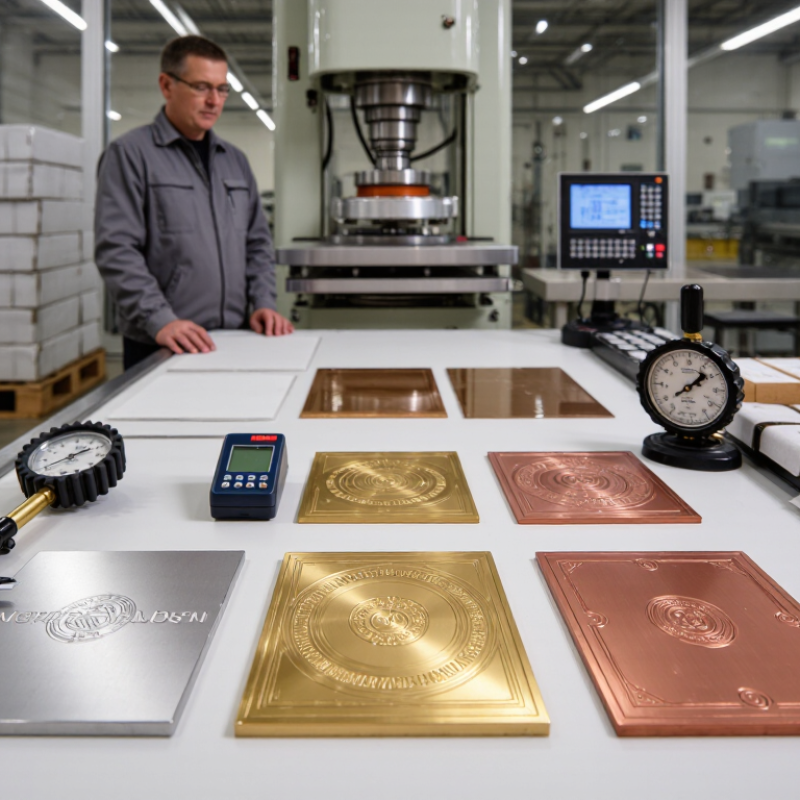
Start with the material and the finished impression. Magnesium plates can suit shorter runs and simpler designs, while brass is often selected for longer runs and fine detail. Copper may be appropriate for specific engraving needs. These are starting points, not guarantees. Plate thickness, relief depth, heat transfer, pressure, and dwell time all affect the result. So does the foil and the actual surface beneath it. Ask suppliers for samples or a press test using your own stock.

Then match the plate to the machine, expected run length, and artwork. Check mounting dimensions, registration requirements, and the supplier’s tolerances before ordering. Request clear specifications and confirm how the plate will be made and inspected. A polished sample can still hide production problems. That is easy to overlook. No single material wins every time; even experienced buyers sometimes need a second trial. This guide explains the trade-offs and practical checks that help you choose with better evidence, not guesswork.
How to Choose a Hot Stamping Plate in 2026?

Define the Product, Substrate, and Required Finish

A hot-stamping plate should be specified from the product outward, not from a foil swatch. Record the item’s shape, press type, run length, and smallest detail. A tiny logo on a curved cap needs different pressure control than a broad design on a flat carton. Name the substrate precisely: uncoated paper, coated board, textured stock, or polymer film. Coatings and surface texture can affect foil release and edge sharpness. Small differences matter.

Define the finish in observable terms: mirror metallic, satin, matte, colored, or combined with embossing.

Smithers’ The Future of Global Packaging to 2028 forecasts the global packaging market will reach $1.23 trillion by 2028. UNEP’s Global Waste Management Outlook 2024 estimates municipal solid waste will rise from 2.1 billion tonnes in 2023 to 3.8 billion tonnes by 2050.

These figures do not dictate plate choice, but they underline why substrate fit and waste prevention deserve attention. Share the stock name, thickness, coating, and desired finish with the plate maker. Request a test on actual production material; a neat lab sample may conceal real press behavior. There is always some uncertainty. Foil can bridge fine gaps, or a textured surface may leave small uncoated specks, so assess the result under normal viewing light.

Compare Plate Materials, Thicknesses, and Engraving Methods

In 2026, choose a hot stamping plate by matching the substrate, run length, and press setup—not by material price alone. Copper conducts heat quickly and suits fine detail, while brass is tougher for longer runs. ASM International’s materials data list thermal conductivity near 400 W/m·K for copper and roughly 100–120 W/m·K for common brasses. These are typical values; alloy and operating temperature matter. Magnesium is lighter and often economical for shorter runs, but it can wear faster. A practical check: inspect small lettering and solid areas on the actual stock before approving production.

Plate thickness must fit the holder, makeready, and counterplate, with enough clearance for even pressure. Thin stock can flex or produce uneven impressions; excessive thickness may prevent correct mounting. Confirm the press specification, then measure the plate rather than relying on a supplier’s nominal size. Small differences matter. I still treat “one thickness fits all” as a risky shortcut.

Engraving choice changes both detail and durability. CNC engraving removes metal mechanically and can create controlled depth for textured or variable designs. Chemical etching is useful for broad image areas, while laser engraving supports precise digital detail, depending on plate alloy and machine capability. Ask for a depth sample and inspect fine lines under magnification. FSEA technical guidance on specialty printing emphasizes matching tooling and process conditions to the substrate; in practice, a test impression on the intended paper or film remains essential. A beautiful die can still disappoint on the wrong stock.

Match Plate Design to the Press, Foil, Heat, and Pressure

How to Choose a Hot Stamping Plate in 2026?
Match Plate Design to the Press, Foil, Heat, and Pressure

A plate must fit the press before it fits the artwork. Check the chase or platen size, mounting method, plate thickness, and available impression area. On a flatbed press, a rigid plate with even support helps maintain consistent contact. Rotary systems need geometry and mounting matched to the cylinder. Small details matter. A plate that rocks slightly can leave a pale edge or uneven foil around fine lettering. Grand View Research’s Hot Stamping Foil Market report valued the global market at about $2.4 billion in 2022, with projected growth through 2030. That growth signals wider use, but it does not make every foil compatible with every plate.

Match the plate surface and relief to the foil, substrate, and design. Fine lines usually need controlled, even pressure; broad solid areas may need careful leveling to avoid misses. Begin with the foil supplier’s recommended temperature and dwell time, then adjust pressure in small steps. Too much heat can distort sensitive stock. Too much pressure can flatten texture or push foil beyond the image. Smithers’ The Future of Global Print to 2028 estimated print market value at $818.8 billion in 2023, highlighting a large production landscape where repeatability matters. Still, market figures cannot choose a press setting. Run a short test on the actual stock, inspect edges under good light, and record the settings. I would not trust one perfect sample alone; consistency across several sheets is the better test.

How to Choose a Hot Stamping Plate in 2026? - Match Plate Design to the Press, Foil, Heat, and Pressure

Job and Substrate Press Fit Plate Material and Design Foil to Match Starting Temperature Pressure and Make-Ready What to Check First
Short-run cards, invitations, and uncoated paper Flat platen or small clamshell press with even, repeatable closure Magnesium plate for economical short runs; use a clean, shallow relief design with adequate spacing between fine elements Foil specified for paper or uncoated stock; choose pigment or metallic foil according to the desired finish About 100–130°C (212–266°F) as a test range Begin with light, even contact. Adjust impression and make-ready gradually; avoid excessive pressure that crushes paper fibers Check solid coverage, fine-line transfer, paper marking, and whether the foil releases cleanly
Coated paper, folding cartons, and smooth labels Platen or rotary press with stable temperature and consistent impression Brass for a durable, detailed plate or longer runs; use a flat design for fine lettering and small graphics Foil formulated for coated paper or the specific coating; coatings can affect adhesion and release About 110–140°C (230–284°F) as a test range Use uniform contact across the image. Set pressure only high enough for complete transfer; confirm the stock is supported without excessive compression Test adhesion after cooling and inspect for pinholes, scuffing, coating lift, or foil filling small gaps
Fine detail, small type, or intricate line art Precision platen press with controlled closure, flat mounting, and consistent heat across the plate Engraved brass or copper; select relief depth and line width to suit the artwork, foil, and substrate rather than making details unnecessarily fine Foil with release and transfer characteristics suited to fine detail on the chosen stock Use the foil supplier’s substrate-specific range; begin near the middle of that range Prioritize parallel platen contact and accurate make-ready. Increase impression in small increments instead of relying on excess force Inspect reversed artwork, counters in letters, edge sharpness, and whether narrow spaces remain open
Long production runs or repeated jobs Production platen or rotary press rated for the plate size, mounting method, and cycle speed Steel for high durability and extended runs; brass is also common where detail and service life must be balanced Choose a foil grade tested for the press speed, substrate, and required release behavior Set from the foil’s technical guidance and verify at production speed; the appropriate setting may differ from a slow proof Maintain repeatable impression and secure plate mounting. Check pressure distribution and recheck after setup changes Monitor transfer consistency, plate wear, foil waste, and temperature stability during the run
Uneven, textured, or slightly curved surfaces Press with suitable compliance or a properly designed counter; confirm the press can accommodate the part’s shape Brass or another suitable engraved plate paired with a compatible resilient counter or silicone pad; design the image for the available contact area Foil specifically approved for the substrate, including its surface texture and any coating Follow the foil and substrate specifications; test a small area before increasing heat Use controlled, even contact. A compliant counter may help distribute pressure, but excessive compression can distort the image or damage the part Check edge-to-edge transfer, surface deformation, image distortion, and whether the part is securely located
Plastic parts, synthetic covers, or coated materials Temperature-controlled press with accurate sensing and a repeatable dwell time Engraved brass or steel selected for the run length; use a design that avoids excessive heat concentration in small areas Foil explicitly compatible with the exact plastic or coating; compatibility varies significantly by material formulation Use the foil and material suppliers’ specified range; start conservatively and test for heat sensitivity Use the minimum impression and dwell needed for transfer. Do not compensate for poor compatibility by applying excessive pressure or heat Check adhesion, gloss change, warping, marking, and any material-specific safety requirements before production
Foil stamping combined with embossing or debossing Press and tooling arrangement designed for the required sequence and registration Matched engraved die and counter-die, with relief and registration designed for the substrate thickness and desired depth Foil rated for the substrate and the planned embossing sequence Set according to the foil maker’s guidance; verify transfer and emboss quality together on production stock Balance impression across both the foil image and relief. Use a controlled make-ready to prevent weak transfer or crushed stock Check registration, foil coverage on raised areas, relief definition, cracking, and stock damage

Setup note: Temperature ranges are starting points, not universal specifications. The correct settings depend on the foil, substrate, plate, press, dwell time, and production speed. Follow the foil and material suppliers’ technical data, then validate heat, impression, and dwell with test impressions before running a full batch.

Assess Precision, Durability, Cost, and Production Volume

How to Choose a Hot Stamping Plate in 2026?

A good plate reproduces the smallest details without filling fine gaps or softening edges. Check the artwork, line width, and required registration before choosing a material. Flatness matters, too. Uneven contact can leave pale patches across a foil area, even when press settings seem correct. Ask for a sample impression on your actual stock. Paper, coated board, and textured surfaces respond differently to heat and pressure. A test can reveal problems that a specification sheet will not.

Durability should match production volume. Brass often suits detailed work and repeated runs, while less costly materials may be practical for short jobs. Steel can be worth considering for demanding, high-volume use, but its higher initial cost needs justification. Count setup, storage, cleaning, and replacement costs—not just the plate price. Then divide the total by expected impressions. The arithmetic is simple. The forecast may not be. If demand is uncertain, avoid paying for a plate built for a volume you may never reach. Also confirm that the plate works with your press and heating method. A slightly imperfect trial run is still useful; note where foil breaks, edges blur, or pressure needs adjustment.

Verify Supplier Specifications and Test the Plate Before Ordering

How to Choose a Hot Stamping Plate in 2026?

Verify Supplier Specifications and Test the Plate Before Ordering

A reliable choice starts with documented specifications, not a polished quote. Ask for the plate material, thickness, engraving depth, flatness tolerance, and maximum working temperature. Confirm that its mounting dimensions match your press. Small details matter. A mismatch of a few millimeters can affect alignment and create uneven impressions.

Request a sample or arrange a trial using your actual foil, substrate, and press settings. Check fine lines, solid areas, and small text under consistent lighting. Look for incomplete transfer, blurred edges, and marks caused by uneven pressure. Test several impressions, not just one. Heat buildup can change results during a longer run. Record the temperature, dwell time, pressure, and material used so you can compare results later.

Before ordering, ask how the supplier inspects plates and handles out-of-tolerance dimensions. Get critical measurements and agreed tolerances in writing. A sample that performs well once is useful, but it does not prove every production plate will be identical. I still find this easy to overlook when deadlines are tight. Allow time for a second test if the first result is inconsistent. That can change your decision.

Go to Top