
What Is the Best Plastic Extruder in 2026?

Choosing the best Plastic Extruder in 2026 starts with the job it must perform, not a brand ranking. A machine suited to rigid profiles may be a poor fit for recycled film or high-volume pipe production. PlasticsEurope’s Plastics – the Fast Facts 2024 reports global plastics production of 413.8 million tonnes in 2023. The OECD’s Global Plastics Outlook reports that only 9% of plastic waste was recycled in 2019. These figures provide important context, but they do not measure extruder performance. They do show why material efficiency and consistent processing deserve careful attention.

A useful comparison should examine resin compatibility, screw and barrel design, output stability, energy use, changeover time, controls, and access to service. Ask suppliers for trial data using your actual material mix, including recycled content where relevant. Watch the melt, inspect the finished product, and record output and energy consumption under repeatable conditions. Small details matter. A stable temperature profile can be more valuable than a larger advertised output. And rankings get messy. Published specifications rarely reveal how a machine behaves during long production runs or frequent material changes. The best choice is therefore the extruder that reliably meets your product requirements, operating constraints, and maintenance capacity—not simply the one with the most impressive brochure. Industry reports set the scene; your own production evidence should make the final call.
What Is the Best Plastic Extruder in 2026?

What a Plastic Extruder Is and How the Process Works

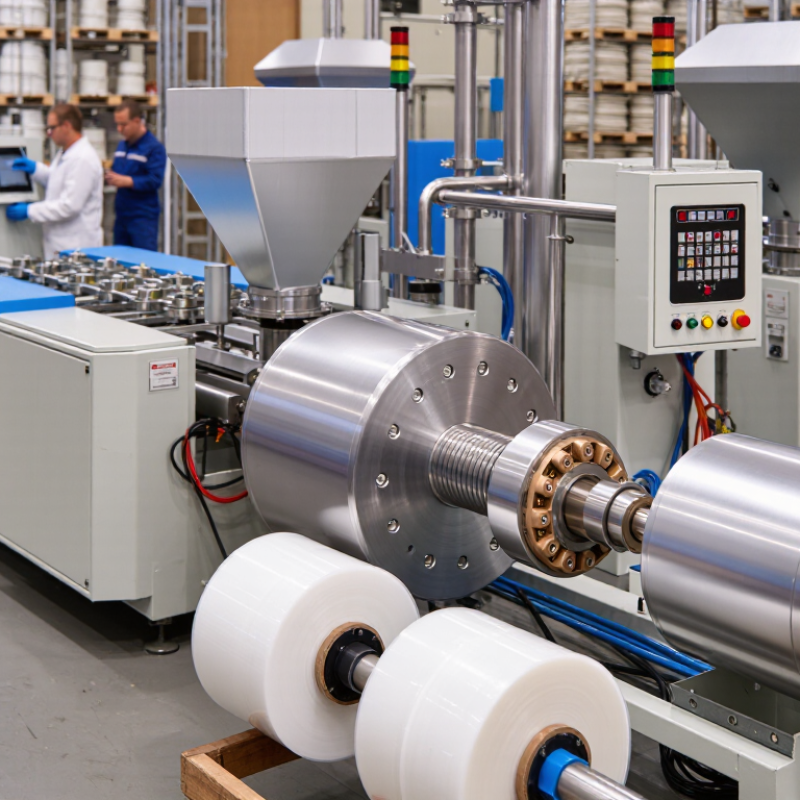
A plastic extruder converts solid polymer into a continuous, shaped product. Pellets or regrind enter through a hopper, then a rotating screw moves them through a heated barrel. Heat and friction soften the material. The screw builds pressure and pushes the melt through a die, which sets its profile. Downstream, the product is cooled, pulled, and cut or wound. Simple in outline. Not always in practice.

The right extruder depends on the resin, additives, output rate, and required tolerances. Screw design, temperature zones, and die geometry all affect melt quality. PlasticsEurope’s 2023 report estimates global plastics production at 400.3 million tonnes in 2022, underscoring the scale of processing demand. That figure covers a broad industry, not extruder sales. A useful specification should therefore start with the material and product, not a headline capacity. A neat diagram hides real variation: moisture, contamination, and uneven feeding can disrupt output.

Tips: Check the resin’s processing window before setting barrel temperatures. Watch melt pressure and product dimensions during a trial run. Keep notes. Small adjustments can matter, though operators sometimes learn this the hard way.

Key Criteria for Comparing Plastic Extruders in 2026

What Is the Best Plastic Extruder in 2026?
Key Criteria for Comparing Plastic Extruders in 2026

A useful comparison starts with your material and target output, not a headline capacity figure. PlasticsEurope’s Plastics – the Fast Facts 2024 reports 413.8 million tonnes of global plastics production in 2023. That scale makes stable, repeatable production worth measuring carefully. Peak output is not enough. Ask suppliers for sustained throughput data using your resin, additives, and operating conditions.

For recycled feedstock, check melt consistency, venting, filtration options, and how quickly operators can adjust temperature and screw speed. The OECD’s Global Plastics Outlook (2022) estimates that only 9% of plastic waste was ultimately recycled in 2019. That figure does not rank extruders, but it highlights why processing variable feedstock matters. Request a controlled trial with representative material. Record output, scrap, and stoppages.

Compare energy use per kilogram, changeover time, cleaning access, and the availability of wear parts. Inspect temperature readings along the barrel; a single display can hide uneven heating. Ask for maintenance intervals and service response times in writing. Some comparisons remain imperfect: laboratory trials rarely reproduce a full production shift. Still, measured results on your material are more useful than brochure claims alone.

What Is the Best Plastic Extruder in 2026? — Key Criteria for Comparing Plastic Extruders in 2026

Comparison criterion Single-screw extruder Co-rotating twin-screw extruder Counter-rotating twin-screw extruder Ram (plunger) extruder
Typical purpose Continuous melting and conveying of thermoplastics for products such as film, sheet, pipe, and profiles. Compounding, mixing, devolatilizing, and processing formulations with multiple ingredients. Continuous processing of materials and profiles that benefit from controlled, relatively gentle conveying. Forcing material through a die with a reciprocating ram; used for specialized materials and applications.
Material and feed flexibility Well suited to many consistent, free-flowing polymer feeds. Performance can vary with resin type, moisture, and feed consistency. Good flexibility for blending polymers and incorporating fillers, additives, or reinforcements. Often selected for particular formulations and profile processes, including some heat-sensitive materials. Useful for materials that are difficult to process in conventional screw machines, including certain high-performance polymers.
Mixing and compounding Generally adequate for melting and basic distributive mixing; less suited to demanding compounding work. Strong mixing capability. Screw elements and configuration can be adjusted for the required compounding task. Can provide controlled mixing and conveying; suitability depends strongly on screw and process design. Limited continuous mixing capability; typically not chosen for complex, high-throughput compounding.
Process continuity Continuous operation after startup, with a straightforward process path. Continuous operation; feed rate, screw configuration, and downstream equipment need to be coordinated. Continuous operation in applications designed around this screw arrangement. Often operates in cycles as the ram advances and returns, so output may be less continuous.
Main advantages Widely used, comparatively simple to operate, and suitable for many standard extrusion lines. Versatile for formulation changes, ingredient dispersion, and compounding operations. Can suit specific profile and material requirements where its conveying characteristics are beneficial. Can process selected materials that are poorly suited to conventional screw-based melting and conveying.
Main trade-offs May provide insufficient mixing for demanding formulations; output and melt quality depend on screw design and feed conditions. More process variables to manage; screw design, feeding, and operating settings require careful setup. Less universally applicable than a standard single-screw configuration; confirm suitability for the exact resin and product. Specialized equipment with cyclic operation; not a general-purpose replacement for continuous screw extrusion.
Best-fit applications Established, steady production of common thermoplastic products where melting and conveying are the primary tasks. Recycled or blended materials, filled compounds, additive incorporation, and other formulation-focused processes. Specific continuous profile or material processes validated for counter-rotating screw technology. Specialized extrusion tasks involving materials or product requirements that justify ram-based processing.
What to verify before purchase Required output, screw diameter and design, resin compatibility, melt uniformity, temperature control, and die requirements. Required throughput, feeding system, screw-element options, torque capacity, venting needs, and cleaning or changeover procedure. Material-specific processing evidence, profile stability, screw and barrel design, temperature control, and tooling compatibility. Material-specific process data, cycle time, ram force, die design, temperature uniformity, and achievable production rate.
Best choice when… You need a proven, continuous machine for a defined product and do not require intensive compounding. You need strong formulation flexibility, mixing, or incorporation of multiple ingredients. Your material and product have been confirmed to benefit from counter-rotating screw operation. Your application is specialized and a screw extruder is not an appropriate processing route.

Selection note: There is no single best extruder for every application. Verify performance using the intended resin, additives, product dimensions, target output, and operating conditions. Actual capability depends on machine design, tooling, and process setup.

Main Extruder Types and Their Production Strengths

What Is the Best Plastic Extruder in 2026?

Main extruder types suit different production goals. A single-screw extruder is a common choice for steady output and straightforward processing. It can produce pipe, sheet, film, and profiles when paired with the right die. Twin-screw models offer stronger mixing and more controlled feeding, making them useful for compounding or handling varied additives. They often cost more and require careful setup.

There is no clean winner; the material and product shape matter more than the machine’s label.

Tips: Match screw design to the resin and target output. Check temperature control, motor load, and die pressure during a trial run. A stable process beats a fast start.

Ram extruders use a plunger to push material through a die, rather than relying on a rotating screw. Their batch-style operation can suit small runs or materials that are difficult to process with conventional screws. Output is usually less continuous, though. Compare realistic throughput, changeover time, and scrap levels—not just rated capacity. A machine that runs smoothly on one resin may behave differently with another, so leave room for testing and adjustment.

How Materials and Applications Affect Extruder Choice

What Is the Best Plastic Extruder in 2026?

The best extruder depends less on a headline output figure than on the material and product. Polyethylene and polypropylene often need steady melt delivery for film, pipe, or profiles. PET requires careful moisture control; damp resin can cause bubbles and weaken the finished part. PVC needs close temperature control because excessive heat can degrade it. Small details count.

Match the screw and barrel to the resin, additives, and expected production rate. Glass-filled compounds can wear screw surfaces faster, while heat-sensitive materials may need gentler processing and shorter residence times. A narrow medical tube, a thick pipe, and a recycled-plastic sheet all place different demands on the die and cooling system. The motor rating alone will not tell you whether the melt will stay uniform.

Start with the actual application: resin grade, target dimensions, hourly output, and acceptable variation. Ask for processing data using a comparable material, not just a promising demonstration with an easier resin. A specification sheet can look convincing. It can also hide setup assumptions. I would leave room for trials, because recycled feedstock and seasonal moisture shifts can change results. Measure the finished product, inspect the melt, and check whether operators can hold stable settings across a full production run.

How to Identify the Best Extruder for Your Production Needs

Choosing the best plastic extruder in 2026 starts with your product, not a machine’s headline output. List the polymers you process, including any blends, and note their melt-temperature ranges. Then define required output in kilograms per hour, product dimensions, and acceptable tolerances. A pipe line and a thin-film line need different screw designs, cooling systems, and controls. Ask suppliers to explain how screw geometry and the length-to-diameter ratio suit your material. Small differences matter. A short production trial can reveal uneven melting, pressure swings, or surface defects that a specification sheet may not show.

Tips: Bring a representative resin sample and your target product drawing to a machine evaluation. Record output, energy use, melt temperature, and dimensional variation. Ask how quickly operators can change materials and clean the screw.

Also compare the full line, not just the extruder. Feeders, filtration, die, calibration, cooling, and take-up equipment can limit usable output. Check whether controls expose useful process data and whether routine parts are readily available. Request service response details and training plans. A spreadsheet helps, but it cannot predict every production problem. I would treat supplier estimates as starting points, then verify them under realistic conditions. The best choice is the setup that reliably meets your quality and throughput needs without making changeovers or maintenance unnecessarily difficult.

What Is the Best Plastic Extruder in 2026?

Typical melt-processing temperature ranges can help narrow down an extruder’s heating and process-control requirements.

Ranges are approximate and vary with resin grade, additives, and processing conditions. Confirm requirements against the material supplier’s data sheet before selecting equipment.

Go to Top