How to Choose the Right Air Compressor for Your Needs?
Choosing the right Air Compressor can be a daunting task. The air compressor industry is growing rapidly, with a projected market size of $30.1 billion by 2026, according to a report by MarketsandMarkets. This growth reflects increasing demand across various sectors, including construction, manufacturing, and automotive repair. Each application has specific needs, making informed choices essential.
Understanding your requirements is crucial. There are many air compressor types, each suited for different purposes. For example, rotary screw compressors are ideal for continuous operation, while reciprocating compressors are better for intermittent use. Data from the Compressed Air and Gas Institute indicates that over 70% of compressed air systems are inefficient. Selecting the appropriate air compressor can help businesses save energy and reduce costs.
Buying an air compressor is not just about power and efficiency. Consider factors like maintenance needs, noise levels, and portability. Inadequate research may lead to purchasing an underpowered or oversized unit, resulting in frustration and inefficiency. Reflecting on your specific applications and conducting thorough evaluations will ensure optimal performance and satisfaction.
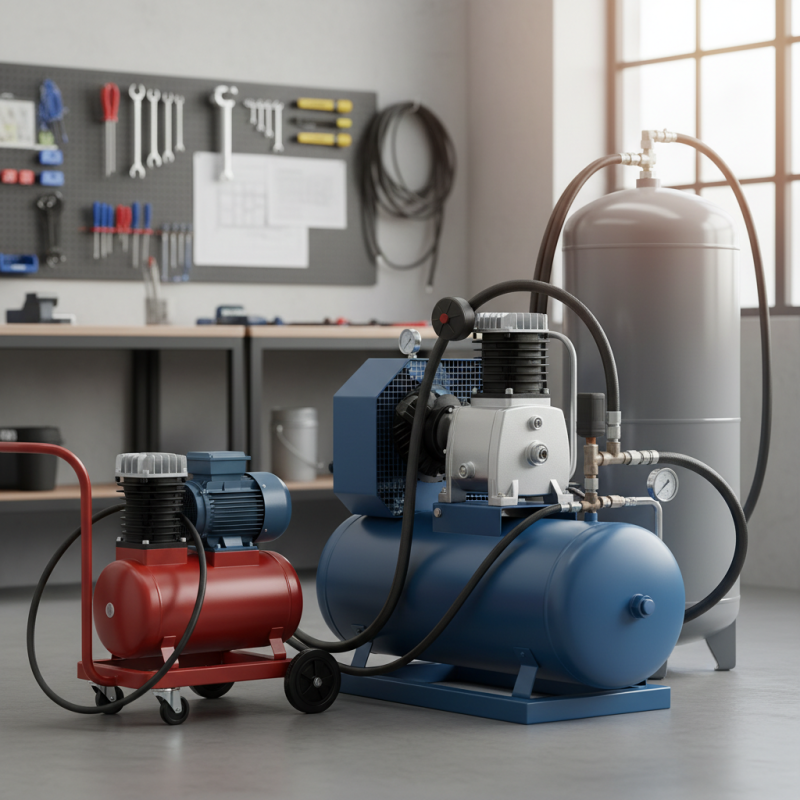
Understanding the Different Types of Air Compressors Available
When choosing an air compressor, understanding the different types is crucial. There are mainly two categories: positive displacement and dynamic compressors. Positive displacement compressors include piston and rotary screw types. They excel in providing high pressure, suitable for heavy-duty tasks like vehicle repair or industrial applications.
On the other hand, dynamic compressors, such as centrifugal compressors, work well for high-flow requirements. They're often used in manufacturing processes where consistent airflow is vital. Each type has its unique characteristics, and the choice depends on your specific needs. Consider the duty cycle and pressure requirements when making a decision.
It's easy to overlook maintenance and operational costs. Some compressors may demand frequent upkeep, impacting your long-term budget. Assessing your specific applications will guide you best. However, always reflect on potential oversights when selecting equipment. Making a hasty choice can lead to inefficiencies or frustration down the line.
Identifying Your Compressed Air Needs and Applications
When selecting an air compressor, understanding your specific compressed air needs is crucial. Start by analyzing the applications you'll use the compressor for. Will you be powering pneumatic tools, inflating tires, or running production machinery? According to a report from the Compressed Air and Gas Institute, nearly 70% of industrial facilities rely on compressed air, highlighting its significance in various operations.
Consider the required pressure and volume. Different tools have varying airflow demands, typically measured in cubic feet per minute (CFM). For example, a nail gun may need 2-5 CFM, while spray painting can require up to 15 CFM. It's essential to match the compressor's output with your most demanding tool, ensuring consistent and efficient performance.
Tips: Always overestimate your CFM needs by 20%. This buffer accommodates additional tools and prevents strain on the compressor. Also, evaluate your workspace. A noisy compressor can lead to distractions and worker fatigue. Noise levels can range from 50 to over 90 decibels, so choose models that align with your work environment. By identifying your needs accurately, you can select an air compressor that truly fits your requirements.
Evaluating Power Sources and Energy Efficiency Considerations
Choosing the right air compressor involves evaluating power sources with energy efficiency in mind. Factors like electricity supply, portability, and usage requirements significantly influence your decision. An air compressor can be powered by electricity or gas. Electric models are quieter and often more efficient, while gas compressors offer mobility for outdoor projects.
Tips: Consider the noise level of electric compressors if you work in residential areas. Gas models are preferable in remote locations.
When assessing energy efficiency, look for compressors with lower CFM (cubic feet per minute) ratings. A balanced CFM allows for effective operation without excessive energy consumption. Understand your air requirements to avoid overspending on electricity.
Tips: Calculate your tools' CFM needs before choosing a compressor. This helps prevent buying an oversized model that wastes energy. Regular maintenance also boosts efficiency, so prioritize checking filters and oil levels.
How to Choose the Right Air Compressor for Your Needs? - Evaluating Power Sources and Energy Efficiency Considerations
| Type of Compressor | Power Source | Horsepower (HP) | CFM @ 90 PSI | Energy Efficiency Rating |
| Reciprocating Compressor | Electric | 5 HP | 18 CFM | 85% |
| Rotary Screw Compressor | Electric | 10 HP | 30 CFM | 90% |
| Portable Air Compressor | Gas | 4 HP | 15 CFM | 80% |
| Scroll Compressor | Electric | 3 HP | 12 CFM | 95% |
| Diaphragm Compressor | Electric | 2 HP | 8 CFM | 75% |
Considering Portability and Size Based on Your Workspace
When selecting an air compressor, portability and size are vital. The compressor must fit your workspace. If your area is small, a compact unit may be the solution. Compact compressors are lightweight and easy to move. This feature is essential for users who must transport equipment often. Consider how frequently you will need to shift the compressor.
On the other hand, larger models offer more power. They can support heavy-duty tasks but take up significant space. If you have a dedicated workshop, a larger compressor might work. Think about your projects. Will you use the compressor regularly? Assessing this can prevent future frustrations. Sometimes, giving up portability can mean gaining efficiency.
Evaluate your needs carefully. There are many options available, and not every size suits every task. A small compressor may limit your work capabilities. Large compressors can be overkill for light tasks. Balancing these aspects requires thought. Reflecting on your workspace dimensions and project requirements is crucial.
Assessing Noise Levels and Maintenance Requirements for Air Compressors
When selecting an air compressor, noise levels and maintenance are crucial factors. Many users overlook noise but it can significantly impact comfort. If a compressor operates loudly, it can disrupt your work or home environment. Typically, quieter models operate between 60-70 decibels, which is comparable to normal conversation. Consider where you'll use the compressor. If it's for a workshop, a louder unit might be tolerable. For indoor use, noise sensitivity becomes paramount.
Maintenance requirements also play an essential role. Regular checks on oil levels and air filters can prevent breakdowns. Some compressors require frequent lubrication while others are oil-free and demand less care. Ignoring maintenance can lead to inefficiency. Users often think they won't encounter problems, but neglect can cause severe malfunctions. Think critically about your needs. Is convenience more important than long-term reliability? Balancing noise and maintenance will help you choose wisely.
Air Compressor Noise Levels and Maintenance Requirements
This chart compares noise levels (in decibels) and maintenance frequency (in hours) of different air compressor types, helping you to choose the right one for your needs.