China Top 10 Aluminum Composite Panel Manufacturers
China’s aluminum composite panel industry combines large-scale production with increasingly demanding façade expectations. This guide examines ten leading Chinese companies that operate as an Aluminum Composite Panel Manufacturer, focusing on more than factory size or export volume. Product consistency, fire performance, coating durability, core composition, and quality control deserve equal attention.
A reliable supplier should show practical evidence. Look for batch traceability, stable thickness, accurate color matching, and documented testing for weather resistance. Ask how panels are stored, cut, and inspected before shipment. Small details matter. A scratched protective film or uneven flatness can create costly problems on site. Building-science expert John Straube has said, “The building enclosure is the environmental separator.” That observation is highly relevant to aluminum composite panels, which must help manage rain, heat, wind, and appearance over many years.
The companies discussed here are assessed through manufacturing capability, technical support, certifications, project experience, and international service. However, no ranking is permanently perfect. Public information can change, and impressive brochures do not always reflect daily production discipline. Buyers should verify current test reports, fire classifications, warranty terms, and reference projects independently. Some manufacturers may perform exceptionally in standard exterior panels but offer weaker solutions for complex fabrication or severe climates. Others may provide strong engineering support while charging more. This guide aims to create a useful starting point, not a final purchasing decision. Careful comparison remains necessary.
China’s Aluminum Composite Panel Industry Overview
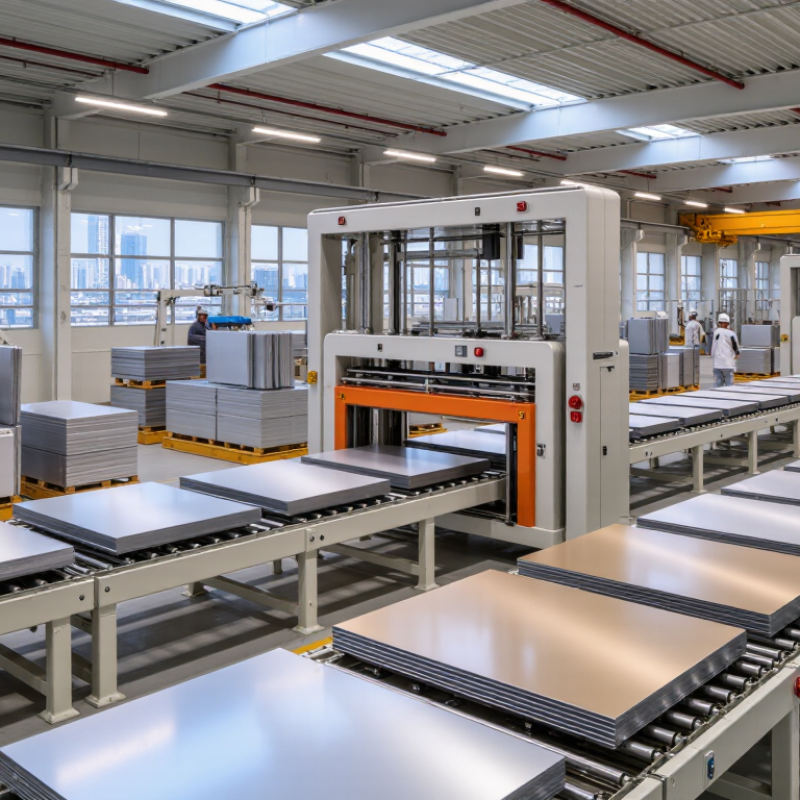
China’s aluminum composite panel industry has grown around large-scale production, export logistics, and project-based customization. The leading ten manufacturers usually serve commercial buildings, transport facilities, retail spaces, and interior renovation markets. Their factories commonly integrate coil coating, panel bonding, trimming, and quality inspection under one roof.
Production quality depends on more than appearance. A reliable manufacturer should control aluminum thickness, core density, coating adhesion, flatness, and panel dimensions. Inspectors often check color differences under controlled lighting and test samples for bond strength. Fire performance also requires documented reports from recognized laboratories, not verbal promises. Factory audits should review batch records, storage conditions, and calibration certificates.
Regional supply chains support fast access to aluminum coils, protective films, packaging materials, and machinery technicians. This helps manufacturers offer standard panels and custom finishes, including metallic colors, stone patterns, and matte surfaces. However, a clean showroom proves little. Some suppliers still rely too heavily on visual inspection. That weakness can appear later as edge peeling, uneven gloss, or warping after installation. Buyers should request recent test data, production samples, and clear tolerances before placing large orders. No factory is perfect. Careful verification remains necessary.
Criteria for Ranking the Top 10 Manufacturers
Ranking China’s top aluminum composite panel manufacturers requires more than comparing factory size. A credible review should examine product consistency, engineering experience, and documented quality controls.
We assess panel flatness, coating adhesion, core composition, fire performance, and weather resistance. Sample testing matters because attractive brochures cannot reveal production weaknesses. Manufacturing capacity also deserves attention. A reliable supplier should handle repeat orders without changing thickness, color, or protective-film quality.
Our criteria include relevant certifications, laboratory records, export experience, and traceable raw-material sourcing. We also consider technical support, customization ability, packaging, lead times, and after-sales communication.
Customer feedback is valuable when it describes actual projects, delivery conditions, and long-term performance. Sustainability should be reviewed carefully, including recyclable materials, responsible coatings, and waste-management practices. A high ranking should reflect evidence, not advertising claims.
Tips: Request current test reports and physical samples before approving a supplier. Compare panels after cutting, bending, and outdoor exposure. Ask how defects are recorded and corrected. Visit the production line when possible. A ranking is useful, but never absolute. Project requirements differ, and one evaluation may miss hidden weaknesses. Even experienced reviewers can overvalue capacity and undervalue communication. The strongest selection combines measurable performance, transparent documentation, and practical project feedback.
Product Range, Technology, and Manufacturing Capabilities
China’s top ten aluminum composite panel manufacturers differ mainly in product range, process control, and project flexibility. Their catalogs commonly include PE-core panels for signage, fire-retardant mineral-core panels for façades, and weather-resistant PVDF-coated panels for high-rise exteriors. Some also offer brushed, mirror, stone, timber, and custom-color finishes. According to Grand View Research, the global aluminum composite panels market was valued at over USD 6 billion in 2023. That scale rewards manufacturers with broader specifications, not merely lower prices.
Technology separates capable factories from trading companies. Leading production lines typically use continuous lamination, automated coating, precision slitting, and online thickness inspection. Coil-coating systems can improve color consistency across large building elevations. CNC routing also supports accurate grooves, folds, and cassette fabrication. Factory audits should examine core density, bond strength, coating thickness, and batch traceability. ASTM E84, EN 13501-1, and ISO 9001 records provide useful reference points, but certificates require verification.
Small details matter. A 0.5-millimeter aluminum skin may improve rigidity, while an unstable core can still cause panel deformation. The International Energy Agency reports that buildings and construction remain responsible for roughly 37% of global energy-related emissions. Therefore, manufacturers increasingly discuss recyclable aluminum, lower-emission coatings, and façade durability. Yet “green” claims are not always comparable. Some product data omit transport impacts or replacement cycles. Buyers should request tested assemblies, not isolated material claims, because real façade performance depends on design, installation, climate, and maintenance.
China Top 10 Aluminum Composite Panel Manufacturers
Product Range, Technology, and Manufacturing Capabilities
Product Range Common commercial ACP configurations include 3 mm and 4 mm standard panels, 4 mm fire-retardant panels, and 6 mm panels for higher rigidity.
Technology Typical production technologies include coil coating, continuous lamination, mineral-filled fire-retardant cores, CNC routing, and laboratory fire-performance testing.
Manufacturing Capabilities Leading facilities commonly support standard and custom lengths, multiple surface finishes, protective films, bending, perforation, and project-based fabrication.
The chart presents representative panel-thickness options commonly published across major aluminum composite panel product catalogs. It is an industry benchmark and does not rank or disclose individual company data.
Market Comparison and Buyer Selection Considerations
Comparing China’s top 10 aluminum composite panel manufacturers requires more than checking online rankings. A reliable buyer should examine panel structure, production controls, and documented test results. Ask whether the aluminum skins meet the stated thickness. Small differences can affect flatness, bending strength, and service life.
Price is important, but it should not lead the decision. Compare core materials, coating systems, color consistency, and fire-performance classifications. Request recent samples from the same production line. A glossy sample may look excellent under showroom lighting. Real projects face dust, heat, rain, and installation damage. I have seen attractive quotations become expensive after repeated replacements.
Supplier evaluation also needs practical evidence. Check factory capacity, inspection records, export experience, packaging methods, and response times. Confirm whether technical drawings and installation guidance are available. Review warranty terms carefully, including exclusions and claim procedures. A long warranty means little without clear responsibilities. Buyers should also compare minimum order quantities, lead times, spare panels, and payment risks. Independent laboratory reports add confidence, but outdated documents deserve careful questioning. No comparison is perfect; project conditions can change the result. A sensible choice balances verified performance, stable supply, technical support, and total installed cost rather than selecting the lowest quotation.