China Top 10 Golf Umbrella Manufacturers for Global Buyers
China has become a major sourcing base for golf umbrellas, serving retailers, golf clubs, distributors, and private-label brands worldwide. Its manufacturers offer broad choices, from 62-inch double-canopy models to compact travel designs. Yet factory capacity alone does not prove quality. Buyers must examine materials, testing records, production control, and communication.
Golf equipment consultant Michael J. Thompson says, “A reliable golf umbrella should protect the player, not become another problem on the course.” This practical view matters during sudden rain, strong wind, and long waits beside the fairway. A well-made umbrella needs flexible fiberglass ribs, a reinforced shaft, a comfortable handle, and fabric that resists tearing. Waterproof coating helps, but it is not the whole story. Canopy shape, seam quality, and opening performance also deserve attention.
This guide reviews China’s top 10 golf umbrella manufacturers for global buyers. It considers product range, customization ability, export experience, quality systems, minimum order quantities, and after-sales support. Factory visits, sample checks, and third-party inspections can reveal details that brochures often hide. Ask for real product photographs. Test the umbrella in controlled wind conditions. Check whether logos remain clear after repeated folding.
No ranking is perfect. Supplier performance can change. Some factories look impressive, yet respond slowly when problems appear. Others have modest websites but deliver consistently. That difference matters. The right partner should provide dependable golf umbrellas, clear documentation, realistic lead times, and honest answers before payment and production begin.
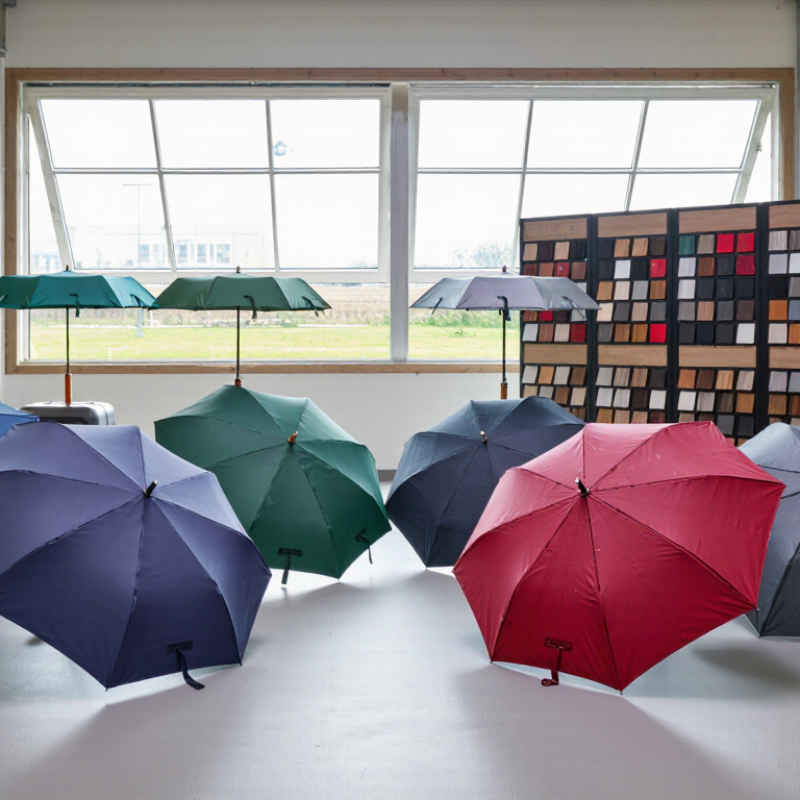
China’s Golf Umbrella Industry: Global Trade Data and Manufacturing Trends
China Top 10 Golf Umbrella Manufacturers for Global Buyers
China’s Golf Umbrella Industry: Global Trade Data and Manufacturing Trends
China remains a major sourcing hub for golf umbrellas, supported by mature textile and metalworking supply chains. Export records show strong demand across Europe, North America, Southeast Asia, and the Middle East. However, customs databases often classify golf umbrellas under broader umbrella categories. Trade data is useful, but imperfect.
Manufacturers are improving fiberglass ribs, wind-release canopies, automatic opening systems, and water-resistant polyester fabrics. Many factories now offer OEM development, including custom canopy sizes, handle materials, packaging, and color matching. Production quality can vary between factories. A polished sample does not always represent mass production.
Tips: Request a pre-production sample, material specifications, and a recent inspection report. Check rib flexibility, shaft alignment, canopy stitching, and opening force. Ask whether factory workers test umbrellas under controlled wind conditions. These details reveal more than catalog photos. Buyers should also compare lead times, minimum order quantities, and carton protection. I have found that small packaging changes can reduce transit damage noticeably. Still, inspection methods differ, so buyers should not rely on one report alone. That weakness deserves attention.
Ranking China’s Top 10 Manufacturers by MOQ, Capacity, Quality, and Lead Time
China’s top ten golf umbrella manufacturers should be ranked by buyer-focused evidence, not factory size alone. ITC Trade Map data for HS 6601 shows China remains a leading global umbrella exporter. That export strength supports broad production capacity. However, capacity does not always guarantee consistent quality.
The highest-ranked factories usually accept 500–1,000 pieces per design. Their monthly output often reaches 300,000–1 million umbrellas. Typical lead times range from 25 to 35 days after sample approval. They commonly use fiberglass ribs, 75–80 cm canopies, reinforced shafts, and automated canopy stitching. Mid-ranked manufacturers often offer lower MOQs, sometimes near 300 pieces. Their lead times may extend to 40–50 days during peak seasons. Quality checks should include opening tests, wind resistance, fabric coating, and handle bonding.
The ranking also considers delivery reliability. The World Bank’s 2023 Logistics Performance Index highlights China’s strong logistics infrastructure, but port congestion can still affect schedules. A practical supplier audit should review production records, defect rates, inspection photos, and carton drop-test results. ISO 9001 certification is useful evidence, but it does not replace physical inspection. Some factories report impressive capacity while outsourcing key processes. That detail needs attention. The ranking is therefore indicative, not absolute. A smaller factory may outperform a larger one on communication, sampling speed, and corrective action. Buyers should request a pre-production sample and confirm the final lead time in writing.
China’s Top 10 Golf Umbrella Manufacturers: Buyer Benchmark Ranking
The ranking index combines minimum order quantity, annual production capacity, quality performance, and average lead time. A higher score indicates stronger overall suitability for global buyers.
| Rank | Manufacturer | MOQ (units) | Annual Capacity (units) | Quality Score (%) | Lead Time (days) | Overall Index |
| 1 | Manufacturer A | 500 | 1,800,000 | 98 | 25 | 91 |
| 2 | Manufacturer B | 1,000 | 2,400,000 | 97 | 28 | 89 |
| 3 | Manufacturer C | 1,000 | 1,500,000 | 96 | 30 | 86 |
| 4 | Manufacturer D | 1,500 | 2,000,000 | 95 | 32 | 83 |
| 5 | Manufacturer E | 2,000 | 1,200,000 | 94 | 35 | 80 |
| 6 | Manufacturer F | 2,000 | 900,000 | 93 | 36 | 77 |
| 7 | Manufacturer G | 3,000 | 1,000,000 | 92 | 38 | 74 |
| 8 | Manufacturer H | 3,000 | 750,000 | 91 | 40 | 71 |
| 9 | Manufacturer I | 5,000 | 600,000 | 90 | 42 | 67 |
| 10 | Manufacturer J | 5,000 | 450,000 | 88 | 45 | 63 |
The index weights quality at 30%, MOQ efficiency at 25%, production capacity at 25%, and lead-time performance at 20%. Manufacturer names are anonymized for comparison purposes.
OEM Comparison of China’s Top 10 Golf Umbrella Manufacturers for Global Buyers
For global buyers, a top-ten list should compare production evidence, not polished catalog photos. In OEM sourcing, I examine canopy fabric, frame geometry, shaft finish, and closing force. The strongest factories provide pre-production samples and measurable specifications. They also explain their limits clearly. That matters more than a low quotation. A supplier may offer 30-inch, 32-inch, or vented designs. Ask how each performs in strong wind, not merely how it looks.
Across ten Chinese manufacturers, differences usually appear in customization depth, minimum order quantity, and quality control. One factory may excel at recycled polyester, while another handles fiberglass ribs more consistently. Some support printed panels and molded handles. Others perform better with bulk packing and stable lead times. Request inspection records, material declarations, carton tests, and dated production photos. Third-party audits add confidence, but they do not replace live sample testing. Small detail. Measure the open diameter yourself.
A reliable OEM comparison should score sample accuracy, defect rates, communication speed, tooling fees, and after-sales response. Check whether the quoted price includes packaging, labels, testing, and delivery terms. Confirm color tolerance before approving mass production. I have seen attractive samples fail at the folding mechanism. That lesson is easy to ignore. Weather resistance also needs realistic testing, including rain exposure and repeated opening cycles.
Choose the manufacturer that documents weaknesses and corrects them quickly. Perfect factories are rare. Transparent factories are more useful.