
7 Best Pallet Truck Seals for Global Buyers

Pallet Truck Seals rarely attract attention until hydraulic oil appears beneath a parked truck or a lift begins to feel uneven. For fleet managers, distributors, and maintenance teams, the right seal can help protect pressure, reduce leakage, and keep routine handling predictable. But “best” depends on the truck, not a sales headline. Bore size, shaft condition, fluid compatibility, operating temperature, and pressure all matter. A seal that fits one pump may fail early in another. Small part. Real impact.

This guide compares seven pallet truck seal options through practical buying questions: dimensions, material, installation requirements, replacement availability, and supplier documentation. It also considers how seals perform around dust, repeated lifting cycles, and storage conditions, where small differences can become visible over time. Buyers sourcing across borders should confirm drawings, tolerances, packaging, and traceable product specifications before placing volume orders. Ask for samples when fit is uncertain. A catalog photo is not enough. That sounds obvious, yet it is often missed.

No single material or design suits every pallet truck. Elastomer selection should match the specified hydraulic fluid and service range; installation quality matters just as much. The comparisons ahead are a starting point, not a substitute for the equipment maker’s dimensions or a qualified technician’s inspection. Some supplier pages leave important details unclear. That deserves a second look. Use these seven choices to narrow the field, then verify the exact part number and fit before buying.
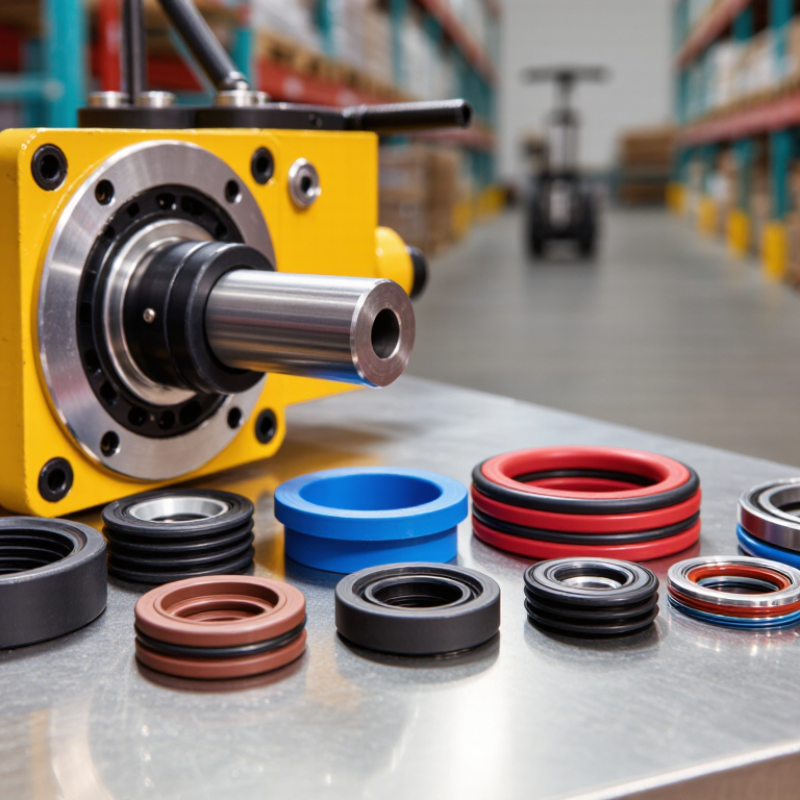
7 Best Pallet Truck Seals for Global Buyers

What Pallet Truck Seals Do and Where They Are Used

Pallet truck seals keep hydraulic oil inside the lifting circuit and help keep dust, water, and grit out. In a hand pallet truck, seals around the pump piston and cylinder support the pressure that raises a loaded fork. Rod wipers scrape dirt from moving surfaces; O-rings seal joints and valves. In powered models, seals also work around hydraulic pumps and lift cylinders. Their job is small, but the symptoms of failure are not: oil on the workshop floor, forks that sink under load, or a pump that needs repeated strokes.

These seals are used in warehouses, loading docks, retail stockrooms, and production areas, where trucks meet rough floors and frequent shifts. Material handling equipment needs routine inspection. OSHA estimates that powered industrial trucks are associated with about 85 fatal accidents and 34,900 serious injuries each year in the United States. This figure covers many truck types, not seal failures specifically, but it shows why maintenance matters. A seal should match the cylinder dimensions, hydraulic fluid, pressure, and operating temperature. Check for flattened edges, cracks, and fresh oil around the rod. A replacement may stop a leak, yet worn surfaces or contaminated fluid can make it fail again. Easy to miss. The repair record should note the seal location and failure signs. That detail can reveal a recurring problem.

How Seal Materials and Designs Affect Performance

7 Best Pallet Truck Seals for Global Buyers
How Seal Materials and Designs Affect Performance

A pallet truck seal does more than stop oil leaks. It keeps dust, water, and grit away from moving parts. Material choice matters. Nitrile rubber suits many standard hydraulic oils and offers practical wear resistance. Polyurethane often handles abrasion well, especially where a seal meets a moving rod. PTFE can reduce friction, but its fit and support need careful design. No material is ideal for every warehouse.

Look at the working conditions, not just the product description. A truck used on a cold loading dock may need different flexibility from one operating near warm machinery. Check fluid compatibility, temperature range, pressure, and expected cycle frequency. A dust lip or wiper can help protect the main seal when forks travel across dirty floors. Small details matter. A tight seal can still fail if installation damages its edge or the rod surface is scratched. That is easy to overlook. Ask suppliers for test data under conditions close to your own, and compare replacement intervals from actual use. A seal that lasts longer on paper may not perform the same way in a wet, gritty aisle.

7 Best Pallet Truck Seals for Global Buyers - How Seal Materials and Designs Affect Performance
No. Seal Type and Design Common Material Typical Pallet Truck Application Performance Advantages Limitations and Buyer Checks
1 Rod U-cup seal Polyurethane (PU) Dynamic seal around the hydraulic cylinder rod Good wear and abrasion resistance; the lip profile maintains contact with the moving rod and helps limit oil leakage. Confirm rod diameter, groove dimensions, pressure conditions, fluid compatibility, and the PU grade’s temperature limits.
2 Piston seal Polyurethane (PU), or a PTFE-based design for selected applications Dynamic seal between the piston and cylinder bore Helps retain pressure across the piston; single-acting or double-acting profiles can be selected to suit the cylinder design. Check bore size, piston groove, pressure direction, clearance, and whether the seal profile suits the cylinder’s operating cycle.
3 Energized cap seal PTFE jacket with an elastomer energizer Rod or piston applications where low friction is important PTFE offers low friction and broad chemical resistance; the energizer helps maintain sealing contact at low pressure. Requires correct groove geometry and surface finish. Confirm the PTFE compound and energizer are compatible with the hydraulic fluid and temperature range.
4 Static O-ring Nitrile rubber (NBR) Static joints, plugs, covers, and selected low-motion interfaces Simple, widely used design with good compatibility with many mineral-oil hydraulic fluids when the correct compound is specified. Choose the correct cross-section and hardness; avoid using a standard static O-ring as a high-wear reciprocating seal.
5 High-temperature O-ring Fluoroelastomer (FKM) Static hydraulic joints exposed to elevated temperatures or oils requiring an FKM compound Many FKM compounds provide good heat and oil resistance, making them useful where a standard NBR compound may not meet service requirements. Verify the exact compound’s compatibility and low-temperature flexibility. FKM is not automatically suitable for every fluid or climate.
6 Single-lip rod wiper Polyurethane (PU) External end of the cylinder gland, to wipe dirt from the rod Helps prevent dust and debris from entering the cylinder; PU wipers generally offer good resistance to abrasion. Check wiper-lip geometry, rod size, and exposure to dirt or impact. A wiper does not replace the internal rod seal.
7 Double-lip rod wiper Usually PU; material depends on the application Cylinder gland where both external contamination control and oil-film management are needed The outer lip removes contaminants while the inner lip can help manage residual oil on the rod. Confirm the two-lip profile fits the gland and does not trap contaminants. Check rod condition and the intended oil-return arrangement.
Selection note: Seal performance depends on the complete assembly, including material compound, dimensions, groove design, rod and bore finish, hydraulic fluid, temperature, pressure, and contamination. Confirm specifications against the pallet truck’s cylinder and operating conditions before ordering.

Key Factors to Compare When Selecting Pallet Truck Seals

When comparing pallet truck seals, start with the exact shaft, bore, and groove dimensions. A few tenths of a millimeter can affect fit and leakage. Small differences matter. Check the seal’s lip direction and cross-section against the hydraulic cylinder, not just an old sample; worn seals may have changed shape. Also confirm the operating pressure, temperature range, and hydraulic fluid type.

Material choice should reflect real working conditions. Polyurethane often suits abrasion-prone, reciprocating applications, while other elastomers may better tolerate particular fluids or temperatures. No material wins in every case. Dust, washdown routines, and long periods of storage can also change performance. A seal that works well indoors may wear faster around gritty floors or frequent moisture. Compare stated limits with the truck’s actual duty cycle.

Fit and supply details deserve equal attention. Ask for dimensional tolerances, material data, and inspection records, then check whether replacement seals can be supplied consistently. If possible, test a small batch in the relevant cylinder before a larger order. Record leakage, drag, and visible wear after use. A tidy specification sheet can still miss a real-world mismatch. That is easy to overlook. Selection takes more than matching a catalog number.

Pallet Truck Seal Selection: Typical Temperature Ranges

Compare common seal materials by their approximate service-temperature ranges. Actual limits depend on the specific compound, hydraulic fluid, pressure, and operating conditions.

Temperature capability is only one selection factor. Confirm fluid compatibility and the seal manufacturer’s specifications before choosing a material.

Seven Pallet Truck Seal Options for Different Operating Needs

Pallet trucks work in demanding conditions: frequent lifting, low-clearance travel, and occasional contact with grit or wash water. The right seal depends on its location, pressure, fluid, and temperature. Seven options serve different needs.

Seal types

Piston seals keep hydraulic pressure on the intended side of the cylinder.

Rod seals limit oil leakage around the moving pump or cylinder rod.

Dust wipers scrape away grit before it reaches the rod seal.

U-cup seals can suit reciprocating movement when their profile and material match the application.

O-rings are useful for static joints, such as fittings and covers, but need a correctly sized groove.

Backup rings support O-rings where pressure may force them into a gap.

Bonded seals combine a metal washer with an elastomer ring, often helping seal threaded connections.

Check the old seal’s dimensions, cross-section, and position before ordering. Measure the groove when possible; a worn seal may no longer reflect its original size. Match elastomer compatibility to the hydraulic oil and expected temperature, and confirm pressure limits with the equipment documentation. Keep replacement parts clean during installation. A tiny grain of dirt can matter. One imperfect detail: a seal that fits on the bench may still leak if the rod is scratched or the groove is damaged. Inspect both.

How Global Buyers Can Check Compatibility and Supplier Quality

For a pallet truck seal, match the part to the exact cylinder, not just the truck model. Record the seal profile, shaft or bore diameter, groove dimensions, operating pressure, and fluid type. ISO 3601 provides dimensional guidance for O-rings, while ISO 4413 covers hydraulic-system requirements. Ask the supplier for a drawing and confirm measurements against the worn seal and the equipment manual. Small details matter.

Material choice needs the same care. Hydraulic oil, cleaning chemicals, temperature, and pressure can all affect seal life. ISO 4406:2021 classifies fluid cleanliness by particle counts at ≥4, ≥6, and ≥14 μm per millilitre. Ask for fluid-cleanliness records where contamination is a concern; particles can accelerate wear. Also request the seal compound, hardness data, batch traceability, and inspection results. A polished certificate alone proves little.

Supplier quality is easier to judge when evidence is specific. Request dimensional inspection records and test conditions, including pressure, temperature, and duration. Compare these with your truck’s actual working range, not a generic catalogue claim. I would treat a sample fit as only a first check. Ask for written confirmation of compatibility and keep the test record with the replacement part.

Go to Top