2026 Best Mild Steel Pipe Suppliers for Global Buyers?
Choosing the right Mild Steel Pipe supplier in 2026 requires more than comparing prices on a spreadsheet. Global buyers must examine mill certificates, chemical composition, wall-thickness tolerance, surface condition, and testing records. A pipe that looks acceptable in a warehouse may fail during welding, pressure service, or outdoor storage. Small details matter.
Quality expert W. Edwards Deming offered a useful warning: “In God we trust; all others must bring data.” His principle applies directly to international steel procurement. Reliable suppliers should provide traceable heat numbers, mechanical-test results, inspection reports, and clear documentation for each shipment. Buyers should also verify production capacity, export experience, packaging methods, and communication speed. Can the supplier explain a deviation without hiding behind technical language? That answer often reveals more than a polished website.
This guide reviews the 2026 best Mild Steel Pipe suppliers for global buyers through practical and evidence-based criteria. It considers standards compliance, product range, lead times, customization, logistics, and after-sales support. It also recognizes an uncomfortable reality: no supplier is perfect for every project. A low-cost mill may offer strong production volume but weaker service. A smaller manufacturer may respond quickly but struggle with large orders. Therefore, buyers should match supplier capability with application risk, destination requirements, and inspection needs. Verify the evidence. Ask better questions. The final choice should be dependable, not merely inexpensive.
What Is Mild Steel Pipe and Where Is It Used?
Mild steel pipe is a low-carbon steel tube, commonly containing about 0.05% to 0.25% carbon. This composition supports easy cutting, bending, and welding. It is usually more workable than high-carbon steel. However, it is not naturally corrosion-proof. That distinction matters. A damp warehouse, salty air, or untreated water can cause surface rust quickly. Coatings, galvanizing, suitable wall thickness, and regular inspection are therefore practical requirements.
Mild steel pipe serves many ordinary but demanding applications. Contractors use it for water lines, handrails, scaffolding, structural frames, agricultural equipment, and compressed-air systems. In buildings, square and rectangular sections often support frames, while round pipes carry fluids or form guardrails. The World Steel Association reported global crude steel production of about 1.89 billion tonnes in 2023, showing the scale of the material supply chain. Yet steel volume alone does not prove pipe quality. Buyers should check chemical composition, outside diameter, wall thickness, test certificates, welding quality, and applicable standards such as ASTM, EN, or ISO. The International Energy Agency also identifies steel-intensive networks and construction as major material-demand sectors. Real sites are messier. A pipe that looks strong may still fail after poor storage, incorrect pressure selection, or careless welding. That is where supplier experience becomes important, although even experienced teams should verify every batch.
How to Evaluate Mild Steel Pipe Suppliers in 2026
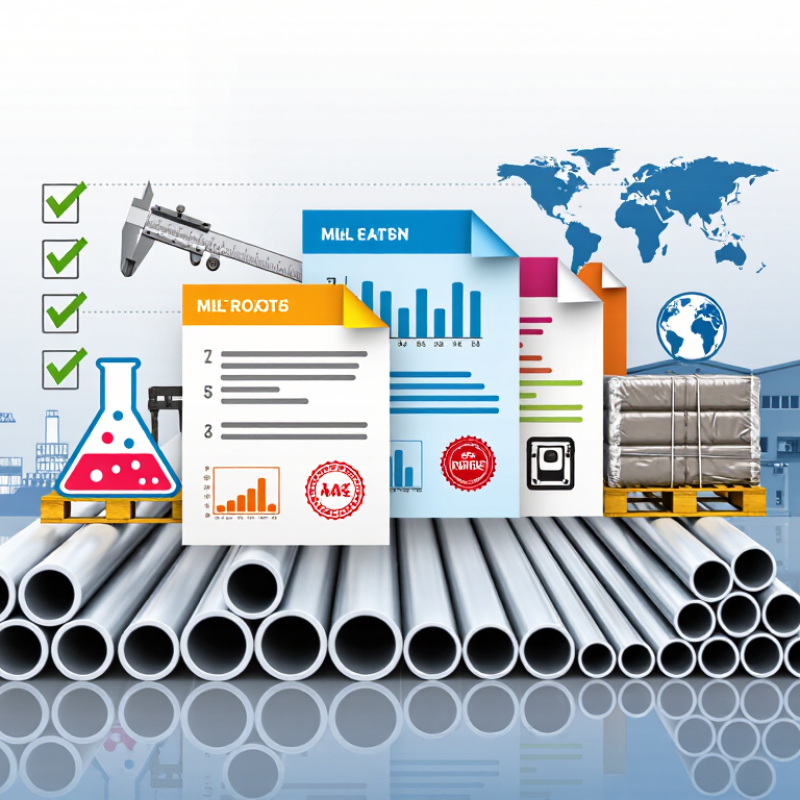
Choosing a mild steel pipe supplier in 2026 requires more than comparing quoted prices. A reliable evaluation starts with traceable production records, consistent dimensions, and clear communication. Ask where the steel is melted, how pipes are formed, and which tests support each shipment. Review recent mill certificates, chemical analysis, tensile results, and hydrostatic or nondestructive testing records. Documents should match heat numbers printed on bundles. Small mismatch. Big warning.
Experience becomes visible during difficult orders. Request a sample inspection plan for wall thickness, outside diameter, coating condition, and end preparation. Confirm tolerances before production, not after loading. A capable supplier should explain its equipment, inspection frequency, packaging method, and response time for defects. Check whether it can provide export documents, packing lists, certificates of origin, and transport updates. Also assess capacity honestly. A large factory may still miss a small delivery window. I have seen buyers overlook this weakness because the price looked efficient.
Tips: Compare at least three written quotations using identical specifications. Ask for independent pre-shipment inspection when risk is high. Confirm payment stages and claims procedures in writing. Test communication with one technical question. Slow, vague answers usually predict harder cooperation. Do not trust polished photos alone. Visit or audit the facility when the project justifies the cost. Recheck standards and destination requirements with a qualified engineer. Suppliers can provide evidence, but buyers still carry responsibility for fit, safety, and final approval.
Key Certifications and Quality Standards for Global Buyers
2026 Best Mild Steel Pipe Suppliers for Global Buyers
Key Certifications and Quality Standards for Global Buyers
Reliable mild steel pipe suppliers should show more than a polished website. They should provide traceable mill test certificates for every production batch. These documents should list chemical composition, yield strength, tensile strength, and elongation. Heat numbers must match the pipe markings and packing records. Small details matter.
Look for a quality management system certified to ISO 9001. Environmental certification, such as ISO 14001, can support responsible production controls. The required product standard depends on the application and destination market. Common references include ASTM A53, ASTM A106, EN 10255, and API 5L. Buyers should confirm the exact grade, wall thickness, length tolerance, and test requirements before ordering. A certificate alone is not enough.
Experienced suppliers normally accept independent inspection before shipment. Inspectors may check surface condition, outside diameter, wall thickness, weld quality, and hydrostatic pressure performance. Coated pipes need additional checks for coating thickness, adhesion, and holiday defects. Ask for sample reports, inspection procedures, and corrective-action records. This reveals how the supplier handles mistakes. Honestly, even careful factories can produce occasional dimensional variation. The real test is whether they identify it, document it, and prevent repetition. Destination-specific marking, packaging, and customs documents should also be reviewed with the supplier and local compliance team.
How to Select the Best Supplier for Your Project Needs
Selecting a mild steel pipe supplier starts with your project conditions, not a polished catalogue. Define diameter, wall thickness, grade, pressure, temperature, coating, and delivery port. The World Steel Association reported global crude steel production of about 1.88 billion tonnes in 2024. That scale creates choice, but also uneven quality control.
Request recent mill test certificates for the exact heat number. Check chemical composition, tensile strength, yield strength, elongation, and hydrostatic test results. Confirm the applicable standard, such as ASTM A53, ASTM A106, or EN 10255. A supplier should explain tolerances clearly. Ask for independent inspection before shipment when failure would stop construction. Also review ISO 9001 certification, calibration records, nonconformance procedures, and traceability from billet to bundle.
Price deserves careful attention. Compare total delivered cost, not only the quoted tonnage rate. Include inspection, coating, packing, inland transport, duties, and possible storage. The World Bank Commodity Markets Outlook shows that industrial material prices can shift sharply with energy and freight conditions. A cheap offer may become expensive after delays. Request a production schedule with hold points and photographs of markings, end protection, and bundle tags. Small details matter. I would still challenge my own checklist: certification does not guarantee perfect field performance. Confirm samples against drawings, and make payment milestones match verified progress.
2026 Mild Steel Pipe Supplier Selection: Reference Strength by Common Pipe Grade
Minimum specified yield strength is a useful first-stage filter when comparing suppliers for global projects. ASTM A53 Grade B, API 5L Grade B, EN 10255 S195, and EN 10217-1 P195TR1 are commonly referenced mild-steel pipe grades. Buyers should also verify wall thickness, outside diameter, coating, welding requirements, inspection documents, applicable standards, and current certificate data before placing an order.
Reference values shown in MPa; always confirm the latest applicable edition of the specified standard and the supplier’s mill test certificate.